

1.0
Cite Score 2025
SJR: 0.129 / SNIP: 0.140

JMERC
Owner
Janbazan Medical and Engineering Research Center (JMERC) is the owner of IJWPH.
Volume 18, Issue 2 (2026)
3 2026, 18(2): 141-148 |
Back to browse issues page
Request Type:




History
Received: 2026/02/15 | Accepted: 2026/04/10 | Published: 2026/04/23
Received: 2026/02/15 | Accepted: 2026/04/10 | Published: 2026/04/23
How to cite this article
AI-khafaji I, Shlash A. Physical Resilience and Coping Strategies in Adults with Obesity. 3 2026; 18 (2) :141-148
URL: http://ijwph.daneshafarand.org/article-3-85700-en.html
URL: http://ijwph.daneshafarand.org/article-3-85700-en.html
Download citation:
BibTeX | RIS | EndNote | Medlars | ProCite | Reference Manager | RefWorks
Send citation to:


Rights and permissions
BibTeX | RIS | EndNote | Medlars | ProCite | Reference Manager | RefWorks
Send citation to:


1- Adult Health Nursing Department, College of Nursing, University of Babylon, Hillah, Iraq
Full-Text (HTML) (62 Views)
Introduction
Obesity is defined by the World Health Organization (WHO) as an abnormal or excessive accumulation of body fat that poses a health risk. It is classified using the body mass index (BMI), with a person considered obese if their BMI is 30kg/m² or higher. However, obesity involves more than just a numerical classification based on a specific measurement; it is a chronic and pathological condition affecting most of the body’s systems and vital functions [1]. In 2022, one in eight people worldwide was obese, and obesity rates among adults globally have more than doubled since 1990. The report also showed that 16% of adults are obese [2]. Obesity significantly increases the risk of developing a wide range of chronic diseases. It is associated with a much higher likelihood of developing type 2 diabetes, cardiovascular diseases such as hypertension, coronary artery disease, and stroke, as well as dyslipidemia, non-alcoholic fatty liver disease, certain cancers, and other health conditions. Obesity also has a significant impact on an individual’s psychological and social well-being, leading to social stigma, depression, and a reduced quality of life. It is worth noting that even moderate weight loss (around 5-10% of body weight) can lead to significant improvements in many obesity-related health complications [3].
The prevalence of obesity has increased dramatically over recent decades, making it a global epidemic that affects populations across most regions of the world. In 2022, more than one billion people were living with obesity, while approximately 43% of adults were classified as overweight or obese [4]. Obesity is associated with serious health consequences that increase morbidity and mortality worldwide. It is responsible for more than 2.8 million deaths annually and contributes substantially to disability-adjusted life years (DALYs). As a result, obesity has become a major global health issue due to its strong association with chronic diseases and reduced quality of life [5].
The Middle East and Africa region shows a growing media and health profile, with subscription penetration reaching 21.2% and growth of 33.1%. In addition, obesity remains highly prevalent in the region, with pooled data from 101 studies (n ≈ 698,905) reporting obesity at 21.17% and overweight at 33.14% among adults [6]. In Iraq, non-communicable diseases account for about 55% of all deaths and are strongly associated with modifiable risk factors such as poor diet, physical inactivity, smoking, and obesity. Local studies report high rates of overweight and obesity among adults across different regions, highlighting the need for updated national data and effective prevention strategies [7].
Physical resiliency is essential for maintaining functional performance and overall health, especially in adults with obesity. Obesity places additional stress on the joints, muscles, heart, and respiratory system, increasing the need for high physical resiliency to cope with these challenges [8]. Individuals with high physical resiliency maintain normal body functions compared to those with low physical resiliency. Low physical resiliency increases the risk of injury, slows the recovery process, and reduces the ability to engage in regular physical activity and control weight, thereby increasing obesity-related health complications. Therefore, enhancing physical resiliency in adults with obesity is a crucial part of weight management and improving quality of life, as it helps reduce health complications, enhances the ability to engage in physical activity, and improves the body’s functional adaptation to the stresses of excess weight [9].
Coping strategies reflect the ways individuals manage psychological, behavioral, and social pressures. Some individuals resort to eating as a reaction to negative feelings or daily stressors, while others rely on more structured and positive coping mechanisms such as modifying their diet, engaging in physical activity, or seeking medical support. Emotion-management strategies aim to regulate feelings and emotional responses to reduce the impact of stress through techniques such as meditation, relaxation, re-evaluating negative situations, or seeking social support [10]. Therefore, the relationship between coping strategies and the outcomes of psychological and physical therapy in obese adults is crucial for developing supportive psychological interventions before and after any treatment program, thereby enhancing its success and sustainability [11].
Resilience-related characteristics are associated with adaptive coping strategies and healthier lifestyle behaviors among adults who are overweight or obese [12]. Individuals with higher resilience are more likely to maintain physical activity, adhere to dietary recommendations, and effectively manage obesity-related physical and psychological challenges [13]. Conversely, lower resilience has been associated with maladaptive coping behaviors, poorer health outcomes, and reduced quality of life [14]. However, evidence regarding this relationship among adults with obesity in the Iraqi context remains limited, highlighting the need for further investigation. Coping strategies, whether through direct confrontation or by regulating emotions and emotional responses, also contribute to enhancing the ability to manage daily obesity-related stressors, improving adherence to a healthy lifestyle, and reducing the risk of relapse after weight management programs [15]. Finally, obesity is a chronic global health problem associated with multiple physical and psychological risks. Therefore, physical resilience and coping strategies play a crucial role in helping individuals cope with the challenges of obesity and maintain healthy behaviors.
This study aimed to assess physical resilience and coping strategies and their relationship with socio-demographic and clinical data among adults with obesity.
Instrument and Methods
Design and sample
This descriptive cross-sectional study was performed on 180 adults with obesity who attended Marjan Teaching Hospital and Al Imam Al Sadiq Teaching Hospital in Al-Hillah City, Iraq, from September 10, 2025, to May 8, 2026.
Participants aged 18 years and older with a BMI of ≥30kg/m² who agreed to participate and provided informed consent were included.
A non-probability convenience sampling method was used to recruit participants. A total of 200 individuals were initially selected, including 20 participants who took part in the pilot study and were subsequently excluded from the final analysis. The final study sample consisted of 180 adults with obesity. The sample size was determined using Richard Geiger’s equation with d=0.05, z=1.96, N=population, and n=sample size.
Procedure
After obtaining ethical approval from the Scientific and Ethical Committee of the College of Nursing, University of Babylon, and securing official permissions from the selected study settings, the researcher initiated the data collection process. Participants who met the inclusion criteria were approached and informed about the purpose and objectives of the study. Written informed consent was obtained from all participants before their enrollment in the study. Data were collected through direct face-to-face interviews using a structured questionnaire. The questionnaire was administered individually to adults with obesity in the selected settings. The researcher explained the study objectives and provided clarification whenever needed to ensure accurate responses. Each interview required approximately 20 to 30 minutes to complete. The data collection process was conducted from September 10, 2025, to May 8, 2026. All completed questionnaires were reviewed by the researcher to ensure completeness and accuracy before data entry.
Instrument
A specific questionnaire was adopted after an extensive review of related literature. The questionnaire was divided into three parts. The socio-demographic data section consisted of 11 items, including age, sex, educational level, marital status, employment status, economic status (monthly income), residency, daily living activities (DLA), smoking, alcohol consumption, and dietary habits. The clinical information section consisted of 4 items, including associated comorbidities, BMI, medications, and family history of obesity. The physical resiliency scale consisted of 12 items rated on a 5-point Likert scale [16], and the coping strategies scale consisted of 16 items, also rated on a 5-point Likert scale [17].
The content validity of the instrument was established through review by a panel of ten experts. Minor modifications were made based on the experts’ recommendations to improve clarity, simplicity, and cultural relevance. The content validity index (CVI) values for items ranged from 0.8 to 0.9, with an average of 0.88, and the content validity ratio (CVR) values ranged from 0.65 to 1.0, indicating acceptable validity. A pilot study was conducted with 20 adults with obesity who met the inclusion criteria to assess the feasibility and clarity of the study instrument. The pilot data were not included in the final analysis to ensure the integrity of the main dataset. Internal consistency reliability was assessed using Cronbach’s alpha coefficient. The results indicated satisfactory reliability, with Cronbach’s alpha values of 0.861 for the physical resiliency scale and 0.769 for the coping strategies scale, demonstrating good internal consistency of the study instruments.
Statistical analysis
Data were entered, coded, and initially organized using Microsoft Excel to ensure accuracy, consistency, and completeness of the dataset. After data cleaning, statistical analysis was performed using SPSS 26. The normality of data distribution was examined using the Kolmogorov-Smirnov test and the Shapiro-Wilk test. As the majority of the study parameters were not normally distributed, non-parametric statistical tests were selected for further analysis. The Mann-Whitney U test was used to compare differences between two independent groups, whereas the Kruskal-Wallis H test was applied to compare differences among three or more independent groups.
Findings
A total of 180 adults with obesity participated in the study. The largest proportion of participants were in the 30-39 age group, with a mean age of 37.08±11.44 years (Table 1).
Participants without comorbid conditions demonstrated higher resiliency compared to those with chronic diseases (p=0.021). BMI was significantly associated with physical resiliency (p=0.015), with variations observed across obesity classes. In addition, participants using medications (p=0.031) and those with a positive family history of obesity (p=0.027) showed significantly higher resilience scores than their counterparts. Older participants demonstrated higher coping strategy scores than younger participants (p=0.007). Females showed significantly better coping strategies than males (p=0.02). Higher educational attainment (p=0.035), better employment conditions (p=0.042), and higher monthly income were all associated with stronger coping strategies, Economic Status (p=0.039). In addition, non-smokers exhibited higher coping scores compared to smokers (p=0.026). A strong association was also observed between daily living activities and coping strategies, with participants who had greater functional independence reporting better coping abilities (p=0.001). Participants without comorbid conditions had higher coping strategy scores than those with chronic diseases (p=0.017). BMI was significantly associated with coping strategies, with variations in scores across obesity classes (p=0.011). Participants using medications (p=0.023) and those with a family history of obesity (p=0.025) showed higher coping strategy scores compared to their counterparts.
Table 1. Frequency of participants’ socio-demographic characteristics (n=180)
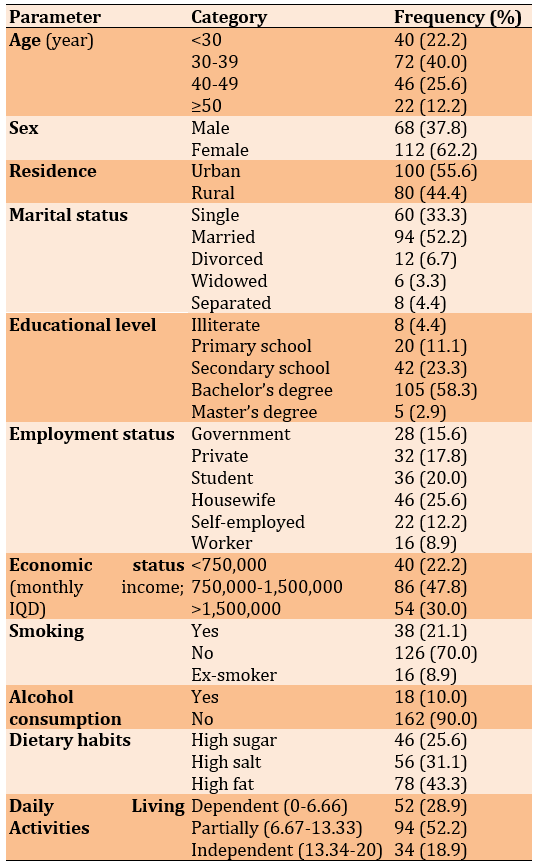
Table 2. Frequency of participants’ clinical characteristics (n=180)
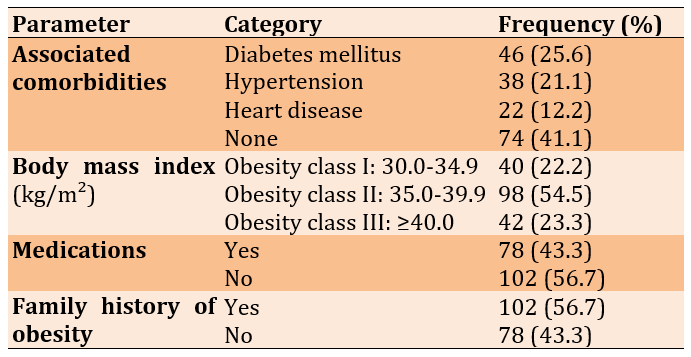
Most participants had no comorbidities, but among those with conditions, diabetes was most prevalent; additionally, the majority were classified as obese (primarily Class II), with over half reporting a positive family history of obesity and more than 40% currently using medication (Table 2).
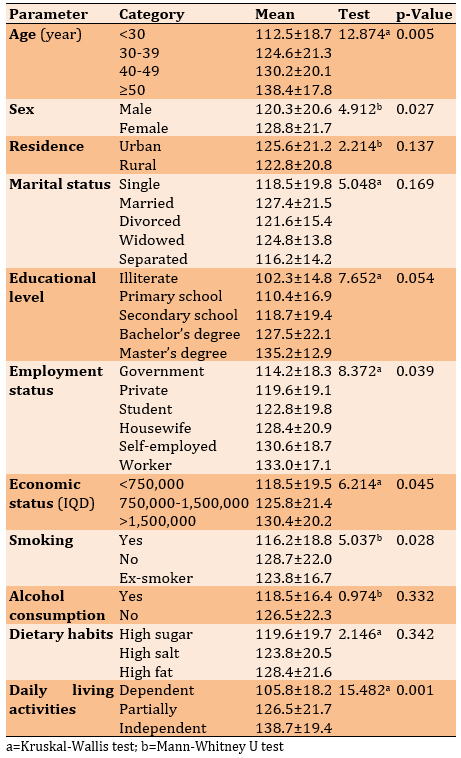
Higher physical resiliency was significantly associated with advanced age, female sex, non-smoking status, and more favorable socio-economic conditions (employment and income) (Table 3).
Table 3. Comparison of overall physical resiliency mean scores by socio-demographic parameters (n=180)
Discussion
This study assessed physical resilience and coping strategies, and their relationships with socio-demographic and clinical data, among adults with obesity. More than half of the participants had an average level of physical resiliency, indicating a moderate ability to adapt to health challenges. This is consistent with the findings of Dong et al. [18] and Zhang et al. [19], who also report average levels of physical resiliency. In contrast, Geirsdottir et al. [20] demonstrate that obesity is associated with reduced physical performance and a decreased ability to perform daily activities. This can be explained by the effects of age, decreased physical activity, and reduced physiological capacity, suggesting a need to promote physical activity to improve adaptation and quality of life.
Most of the participants showed an average level of adaptation strategies, indicating a moderate use of these strategies in general. This finding aligns with that of Vijayaratnam [21], showing that 53.5% of students have an average level of adaptation, as well as that of Elaidy et al. [22], reporting that 41.2% of participants use adaptation strategies at an average level. This can be explained by individual differences, social support, lifestyle, and previous experiences, which lead to an average level of adaptability, reflecting a moderate ability to face challenges under changing conditions.
Older participants had higher physical resiliency and coping strategies. These findings agree with the study by Burch et al. [23], which found that a higher level of physical resilience helps older individuals adapt better to health changes and maintain their physical activity and bodily functions. Additionally, Fomčenko et al. [24] report that, although age is generally associated with decreases in muscle mass and metabolic health, older adults who maintain regular physical activity may preserve or even improve certain aspects of physical resilience and flexibility. The study also aligns with Vannini et al. [25], who report that older adults tend to utilize more adaptive coping strategies compared to younger individuals. This may be explained by increased life experience, improved emotional regulation, and better problem-solving abilities with aging.
Regarding sex, females showed higher physical resiliency and coping strategies than males. This is supported by another study [26], which indicates sex differences in resilience levels, with females exhibiting higher levels of resilience compared to males. Similarly, Cholankeril et al. [27] report that females tend to utilize coping strategies more frequently than males. In contrast, Stalling et al. [28] found that males demonstrate better physical performance but lower physical resiliency than females. This may be explained by gender differences in coping behavior, where females rely more on emotional and social support, enhancing adaptation.
Regarding residence and marital status, no significant differences were found in either outcome. This finding agrees with the study by Song et al. [29], reporting that residence is not significantly associated with resilience levels. Another study [30] also reports no significant effect of marital status on resilience. Similarly, Luo et al. [31] report that demographic factors, such as marital status are weak predictors of coping strategies. This may be explained by the stronger influence of psychological and lifestyle factors compared to demographic background.
Higher education was associated with better coping strategies and slightly higher physical resiliency. This finding is consistent with Man et al. [32], who found that educational level is not significantly associated with resilience among their study participants. The findings also align with González-González et al. [33], who report that academic level is significantly associated with specific coping mechanisms among university students, suggesting that higher educational attainment may enhance adaptive coping skills. This can be explained by improved knowledge, decision-making, and health literacy among educated individuals.
Employed participants showed higher physical resiliency and coping strategies. Chu et al. [34] report a statistically significant difference in resilience levels according to employment status. Similarly, Perreault et al. [35] declare a significant association between employment status and coping strategies. This can be explained by the financial stability, structured daily routines, and social engagement provided by employment.
Higher-income participants demonstrated better physical resiliency and coping strategies. This finding agrees with the study by Speckmann et al. [36], which reported that adults with higher socioeconomic status exhibit better functional outcomes and greater physical adaptability following severe falls, indicating that economic resources may enhance recovery and physical resilience. Another study [37] also reports a significant association between economic status and coping strategies. These findings are consistent with the present study and may be explained by better access to healthcare, nutrition, and healthier living conditions.
Non-smoking participants had higher physical resiliency and coping strategies. This finding aligns with the study by Gaggero [38], which reported that smoking negatively affects physical resilience among adults. It also agrees with the study by Selva Kumar et al. [39], who found that smokers with less effective coping strategies exhibit higher negative affect and cravings, suggesting that smoking is associated with poorer coping mechanisms. This can be explained by healthier lifestyle behaviors among non-smokers, which enhance both physical and psychological adaptation.
Regarding alcohol consumption and dietary habits, no significant differences were observed in either outcome. This finding agrees with the study by Mitkin et al. [40], a population-based study among Russian adults, which reported that harmful drinking is associated with reduced physical performance, while non-drinkers and non-problem drinkers showed variable outcomes. This suggests that although alcohol consumption did not significantly affect physical resiliency in the study sample, harmful drinking may negatively influence physical functional outcomes.
The finding also aligns with the study by Grande De França and Giudici [41], which highlighted that overall dietary patterns, particularly healthy diets, such as the Mediterranean diet, are generally associated with better physical and cognitive function in older adults. This suggests that while individual unhealthy dietary components may not show a direct effect in the study sample, the overall quality of the diet may still play an important role. This can be explained by the fact that diet and alcohol influence health indirectly through overall lifestyle patterns rather than acting as independent determinants.
Regarding daily living activities, higher independence was associated with better physical resiliency and coping strategies. This finding agrees with the study by O’Doherty et al. [42], which also reported that higher levels of daily activity are associated with greater physical resilience. Similarly, the study by Dahlstrand et al. [43] reports a significant association between daily living activities and coping strategies. This can be explained by increased physical activity, autonomy, and self-efficacy in daily functioning.
Participants without chronic diseases demonstrated higher physical resiliency and coping strategies. This finding aligns with the study by Ferreira et al. [44], which reported that older adults with multimorbidity have lower levels of physical activity and functional performance, suggesting that the presence of multiple chronic conditions is associated with reduced physical functioning and resilience. Additionally, the study by Conduah et al. [45] reported that individuals living with chronic diseases often experience higher psychological and physical burdens. These findings are consistent with the present study and may be explained by reduced physical burden and lower psychological stress among healthy individuals.
Regarding BMI, higher BMI was associated with lower physical resiliency and coping strategies. This finding agrees with the study by Li et al. [46], which reports a significant association between BMI and physical resiliency. Similarly, the study by Aynehchi et al. [47] declares a significant association between BMI and coping strategies. These findings are consistent with the present study and may be explained by increased physical limitations, fatigue, and psychological stress among individuals with higher BMI.
Regarding medication use, participants receiving medications showed differences in both outcomes. This finding agrees with the study by Tanaka et al. [48], who reported that appropriate management of multiple medications among community-dwelling older adults is associated with better physical function and a reduced risk of sarcopenia. Additionally, Chatoo et al. [49] reported that patients who adhere to their medication regimens tend to exhibit better coping strategies and improved psychological adaptation. These findings are consistent with the present study and can be explained by better disease control and improved self-management among medication users.
Regarding family history of obesity, a significant association was observed with both physical resiliency and coping strategies. This finding agrees with the study by Rasooly et al. [50], which suggests that genetic and familial health factors may influence individuals’ physical resilience and health outcomes. Similarly, the study by Bashir et al. [51] reports that young adults from families with stronger functioning exhibit more adaptive coping strategies compared to those from less supportive family environments. These findings are consistent with the present study and can be explained by genetic predisposition and shared family lifestyle patterns influencing health behaviors.
The limitations of the study include its conduct in a small geographic area, which may limit the generalizability of the findings. In addition, cultural beliefs and social norms of the participants may have influenced their responses during data collection. Furthermore, some participants withdrew from the study, while others did not complete the questionnaire, resulting in a reduction in the final sample size.
The study recommends developing and implementing intervention programs aimed at enhancing physical resilience and fostering effective coping strategies in obese adults. It also recommends integrating health education strategies into nursing and healthcare programs to support healthy behaviors and improve daily functioning. Furthermore, providing comprehensive physical and psychological support may contribute to enhancing individuals’ ability to cope more effectively with health challenges. Future studies are also recommended to explore additional factors influencing physical resilience and coping strategies.
Conclusion
Physical resilience and coping strategies among adults with obesity are at moderate levels and significantly influenced by socio-demographic and clinical factors.
Acknowledgments: Special thanks to the participants for their valuable contributions to this study.
Ethical Permissions: Ethical approval for this study was obtained from the Scientific Research Ethical Committee of the College of Nursing, University of Babylon (Approval No. 94).
Conflicts of Interest: The authors declared no conflicts of interest.
Authors' Contribution: Sadiq AI-Khafaji I (First Author), Introduction Writer/Main Researcher/Statistical Analyst (60%); Jasim Shlash AM (Second Author), Methodologist/Main Researcher/Discussion Writer (40%)
Funding/Support: None to report.
Obesity is defined by the World Health Organization (WHO) as an abnormal or excessive accumulation of body fat that poses a health risk. It is classified using the body mass index (BMI), with a person considered obese if their BMI is 30kg/m² or higher. However, obesity involves more than just a numerical classification based on a specific measurement; it is a chronic and pathological condition affecting most of the body’s systems and vital functions [1]. In 2022, one in eight people worldwide was obese, and obesity rates among adults globally have more than doubled since 1990. The report also showed that 16% of adults are obese [2]. Obesity significantly increases the risk of developing a wide range of chronic diseases. It is associated with a much higher likelihood of developing type 2 diabetes, cardiovascular diseases such as hypertension, coronary artery disease, and stroke, as well as dyslipidemia, non-alcoholic fatty liver disease, certain cancers, and other health conditions. Obesity also has a significant impact on an individual’s psychological and social well-being, leading to social stigma, depression, and a reduced quality of life. It is worth noting that even moderate weight loss (around 5-10% of body weight) can lead to significant improvements in many obesity-related health complications [3].
The prevalence of obesity has increased dramatically over recent decades, making it a global epidemic that affects populations across most regions of the world. In 2022, more than one billion people were living with obesity, while approximately 43% of adults were classified as overweight or obese [4]. Obesity is associated with serious health consequences that increase morbidity and mortality worldwide. It is responsible for more than 2.8 million deaths annually and contributes substantially to disability-adjusted life years (DALYs). As a result, obesity has become a major global health issue due to its strong association with chronic diseases and reduced quality of life [5].
The Middle East and Africa region shows a growing media and health profile, with subscription penetration reaching 21.2% and growth of 33.1%. In addition, obesity remains highly prevalent in the region, with pooled data from 101 studies (n ≈ 698,905) reporting obesity at 21.17% and overweight at 33.14% among adults [6]. In Iraq, non-communicable diseases account for about 55% of all deaths and are strongly associated with modifiable risk factors such as poor diet, physical inactivity, smoking, and obesity. Local studies report high rates of overweight and obesity among adults across different regions, highlighting the need for updated national data and effective prevention strategies [7].
Physical resiliency is essential for maintaining functional performance and overall health, especially in adults with obesity. Obesity places additional stress on the joints, muscles, heart, and respiratory system, increasing the need for high physical resiliency to cope with these challenges [8]. Individuals with high physical resiliency maintain normal body functions compared to those with low physical resiliency. Low physical resiliency increases the risk of injury, slows the recovery process, and reduces the ability to engage in regular physical activity and control weight, thereby increasing obesity-related health complications. Therefore, enhancing physical resiliency in adults with obesity is a crucial part of weight management and improving quality of life, as it helps reduce health complications, enhances the ability to engage in physical activity, and improves the body’s functional adaptation to the stresses of excess weight [9].
Coping strategies reflect the ways individuals manage psychological, behavioral, and social pressures. Some individuals resort to eating as a reaction to negative feelings or daily stressors, while others rely on more structured and positive coping mechanisms such as modifying their diet, engaging in physical activity, or seeking medical support. Emotion-management strategies aim to regulate feelings and emotional responses to reduce the impact of stress through techniques such as meditation, relaxation, re-evaluating negative situations, or seeking social support [10]. Therefore, the relationship between coping strategies and the outcomes of psychological and physical therapy in obese adults is crucial for developing supportive psychological interventions before and after any treatment program, thereby enhancing its success and sustainability [11].
Resilience-related characteristics are associated with adaptive coping strategies and healthier lifestyle behaviors among adults who are overweight or obese [12]. Individuals with higher resilience are more likely to maintain physical activity, adhere to dietary recommendations, and effectively manage obesity-related physical and psychological challenges [13]. Conversely, lower resilience has been associated with maladaptive coping behaviors, poorer health outcomes, and reduced quality of life [14]. However, evidence regarding this relationship among adults with obesity in the Iraqi context remains limited, highlighting the need for further investigation. Coping strategies, whether through direct confrontation or by regulating emotions and emotional responses, also contribute to enhancing the ability to manage daily obesity-related stressors, improving adherence to a healthy lifestyle, and reducing the risk of relapse after weight management programs [15]. Finally, obesity is a chronic global health problem associated with multiple physical and psychological risks. Therefore, physical resilience and coping strategies play a crucial role in helping individuals cope with the challenges of obesity and maintain healthy behaviors.
This study aimed to assess physical resilience and coping strategies and their relationship with socio-demographic and clinical data among adults with obesity.
Instrument and Methods
Design and sample
This descriptive cross-sectional study was performed on 180 adults with obesity who attended Marjan Teaching Hospital and Al Imam Al Sadiq Teaching Hospital in Al-Hillah City, Iraq, from September 10, 2025, to May 8, 2026.
Participants aged 18 years and older with a BMI of ≥30kg/m² who agreed to participate and provided informed consent were included.
A non-probability convenience sampling method was used to recruit participants. A total of 200 individuals were initially selected, including 20 participants who took part in the pilot study and were subsequently excluded from the final analysis. The final study sample consisted of 180 adults with obesity. The sample size was determined using Richard Geiger’s equation with d=0.05, z=1.96, N=population, and n=sample size.
Procedure
After obtaining ethical approval from the Scientific and Ethical Committee of the College of Nursing, University of Babylon, and securing official permissions from the selected study settings, the researcher initiated the data collection process. Participants who met the inclusion criteria were approached and informed about the purpose and objectives of the study. Written informed consent was obtained from all participants before their enrollment in the study. Data were collected through direct face-to-face interviews using a structured questionnaire. The questionnaire was administered individually to adults with obesity in the selected settings. The researcher explained the study objectives and provided clarification whenever needed to ensure accurate responses. Each interview required approximately 20 to 30 minutes to complete. The data collection process was conducted from September 10, 2025, to May 8, 2026. All completed questionnaires were reviewed by the researcher to ensure completeness and accuracy before data entry.
Instrument
A specific questionnaire was adopted after an extensive review of related literature. The questionnaire was divided into three parts. The socio-demographic data section consisted of 11 items, including age, sex, educational level, marital status, employment status, economic status (monthly income), residency, daily living activities (DLA), smoking, alcohol consumption, and dietary habits. The clinical information section consisted of 4 items, including associated comorbidities, BMI, medications, and family history of obesity. The physical resiliency scale consisted of 12 items rated on a 5-point Likert scale [16], and the coping strategies scale consisted of 16 items, also rated on a 5-point Likert scale [17].
The content validity of the instrument was established through review by a panel of ten experts. Minor modifications were made based on the experts’ recommendations to improve clarity, simplicity, and cultural relevance. The content validity index (CVI) values for items ranged from 0.8 to 0.9, with an average of 0.88, and the content validity ratio (CVR) values ranged from 0.65 to 1.0, indicating acceptable validity. A pilot study was conducted with 20 adults with obesity who met the inclusion criteria to assess the feasibility and clarity of the study instrument. The pilot data were not included in the final analysis to ensure the integrity of the main dataset. Internal consistency reliability was assessed using Cronbach’s alpha coefficient. The results indicated satisfactory reliability, with Cronbach’s alpha values of 0.861 for the physical resiliency scale and 0.769 for the coping strategies scale, demonstrating good internal consistency of the study instruments.
Statistical analysis
Data were entered, coded, and initially organized using Microsoft Excel to ensure accuracy, consistency, and completeness of the dataset. After data cleaning, statistical analysis was performed using SPSS 26. The normality of data distribution was examined using the Kolmogorov-Smirnov test and the Shapiro-Wilk test. As the majority of the study parameters were not normally distributed, non-parametric statistical tests were selected for further analysis. The Mann-Whitney U test was used to compare differences between two independent groups, whereas the Kruskal-Wallis H test was applied to compare differences among three or more independent groups.
Findings
A total of 180 adults with obesity participated in the study. The largest proportion of participants were in the 30-39 age group, with a mean age of 37.08±11.44 years (Table 1).
Participants without comorbid conditions demonstrated higher resiliency compared to those with chronic diseases (p=0.021). BMI was significantly associated with physical resiliency (p=0.015), with variations observed across obesity classes. In addition, participants using medications (p=0.031) and those with a positive family history of obesity (p=0.027) showed significantly higher resilience scores than their counterparts. Older participants demonstrated higher coping strategy scores than younger participants (p=0.007). Females showed significantly better coping strategies than males (p=0.02). Higher educational attainment (p=0.035), better employment conditions (p=0.042), and higher monthly income were all associated with stronger coping strategies, Economic Status (p=0.039). In addition, non-smokers exhibited higher coping scores compared to smokers (p=0.026). A strong association was also observed between daily living activities and coping strategies, with participants who had greater functional independence reporting better coping abilities (p=0.001). Participants without comorbid conditions had higher coping strategy scores than those with chronic diseases (p=0.017). BMI was significantly associated with coping strategies, with variations in scores across obesity classes (p=0.011). Participants using medications (p=0.023) and those with a family history of obesity (p=0.025) showed higher coping strategy scores compared to their counterparts.
Table 1. Frequency of participants’ socio-demographic characteristics (n=180)
Table 2. Frequency of participants’ clinical characteristics (n=180)
Most participants had no comorbidities, but among those with conditions, diabetes was most prevalent; additionally, the majority were classified as obese (primarily Class II), with over half reporting a positive family history of obesity and more than 40% currently using medication (Table 2).
Higher physical resiliency was significantly associated with advanced age, female sex, non-smoking status, and more favorable socio-economic conditions (employment and income) (Table 3).
Table 3. Comparison of overall physical resiliency mean scores by socio-demographic parameters (n=180)
Discussion
This study assessed physical resilience and coping strategies, and their relationships with socio-demographic and clinical data, among adults with obesity. More than half of the participants had an average level of physical resiliency, indicating a moderate ability to adapt to health challenges. This is consistent with the findings of Dong et al. [18] and Zhang et al. [19], who also report average levels of physical resiliency. In contrast, Geirsdottir et al. [20] demonstrate that obesity is associated with reduced physical performance and a decreased ability to perform daily activities. This can be explained by the effects of age, decreased physical activity, and reduced physiological capacity, suggesting a need to promote physical activity to improve adaptation and quality of life.
Most of the participants showed an average level of adaptation strategies, indicating a moderate use of these strategies in general. This finding aligns with that of Vijayaratnam [21], showing that 53.5% of students have an average level of adaptation, as well as that of Elaidy et al. [22], reporting that 41.2% of participants use adaptation strategies at an average level. This can be explained by individual differences, social support, lifestyle, and previous experiences, which lead to an average level of adaptability, reflecting a moderate ability to face challenges under changing conditions.
Older participants had higher physical resiliency and coping strategies. These findings agree with the study by Burch et al. [23], which found that a higher level of physical resilience helps older individuals adapt better to health changes and maintain their physical activity and bodily functions. Additionally, Fomčenko et al. [24] report that, although age is generally associated with decreases in muscle mass and metabolic health, older adults who maintain regular physical activity may preserve or even improve certain aspects of physical resilience and flexibility. The study also aligns with Vannini et al. [25], who report that older adults tend to utilize more adaptive coping strategies compared to younger individuals. This may be explained by increased life experience, improved emotional regulation, and better problem-solving abilities with aging.
Regarding sex, females showed higher physical resiliency and coping strategies than males. This is supported by another study [26], which indicates sex differences in resilience levels, with females exhibiting higher levels of resilience compared to males. Similarly, Cholankeril et al. [27] report that females tend to utilize coping strategies more frequently than males. In contrast, Stalling et al. [28] found that males demonstrate better physical performance but lower physical resiliency than females. This may be explained by gender differences in coping behavior, where females rely more on emotional and social support, enhancing adaptation.
Regarding residence and marital status, no significant differences were found in either outcome. This finding agrees with the study by Song et al. [29], reporting that residence is not significantly associated with resilience levels. Another study [30] also reports no significant effect of marital status on resilience. Similarly, Luo et al. [31] report that demographic factors, such as marital status are weak predictors of coping strategies. This may be explained by the stronger influence of psychological and lifestyle factors compared to demographic background.
Higher education was associated with better coping strategies and slightly higher physical resiliency. This finding is consistent with Man et al. [32], who found that educational level is not significantly associated with resilience among their study participants. The findings also align with González-González et al. [33], who report that academic level is significantly associated with specific coping mechanisms among university students, suggesting that higher educational attainment may enhance adaptive coping skills. This can be explained by improved knowledge, decision-making, and health literacy among educated individuals.
Employed participants showed higher physical resiliency and coping strategies. Chu et al. [34] report a statistically significant difference in resilience levels according to employment status. Similarly, Perreault et al. [35] declare a significant association between employment status and coping strategies. This can be explained by the financial stability, structured daily routines, and social engagement provided by employment.
Higher-income participants demonstrated better physical resiliency and coping strategies. This finding agrees with the study by Speckmann et al. [36], which reported that adults with higher socioeconomic status exhibit better functional outcomes and greater physical adaptability following severe falls, indicating that economic resources may enhance recovery and physical resilience. Another study [37] also reports a significant association between economic status and coping strategies. These findings are consistent with the present study and may be explained by better access to healthcare, nutrition, and healthier living conditions.
Non-smoking participants had higher physical resiliency and coping strategies. This finding aligns with the study by Gaggero [38], which reported that smoking negatively affects physical resilience among adults. It also agrees with the study by Selva Kumar et al. [39], who found that smokers with less effective coping strategies exhibit higher negative affect and cravings, suggesting that smoking is associated with poorer coping mechanisms. This can be explained by healthier lifestyle behaviors among non-smokers, which enhance both physical and psychological adaptation.
Regarding alcohol consumption and dietary habits, no significant differences were observed in either outcome. This finding agrees with the study by Mitkin et al. [40], a population-based study among Russian adults, which reported that harmful drinking is associated with reduced physical performance, while non-drinkers and non-problem drinkers showed variable outcomes. This suggests that although alcohol consumption did not significantly affect physical resiliency in the study sample, harmful drinking may negatively influence physical functional outcomes.
The finding also aligns with the study by Grande De França and Giudici [41], which highlighted that overall dietary patterns, particularly healthy diets, such as the Mediterranean diet, are generally associated with better physical and cognitive function in older adults. This suggests that while individual unhealthy dietary components may not show a direct effect in the study sample, the overall quality of the diet may still play an important role. This can be explained by the fact that diet and alcohol influence health indirectly through overall lifestyle patterns rather than acting as independent determinants.
Regarding daily living activities, higher independence was associated with better physical resiliency and coping strategies. This finding agrees with the study by O’Doherty et al. [42], which also reported that higher levels of daily activity are associated with greater physical resilience. Similarly, the study by Dahlstrand et al. [43] reports a significant association between daily living activities and coping strategies. This can be explained by increased physical activity, autonomy, and self-efficacy in daily functioning.
Participants without chronic diseases demonstrated higher physical resiliency and coping strategies. This finding aligns with the study by Ferreira et al. [44], which reported that older adults with multimorbidity have lower levels of physical activity and functional performance, suggesting that the presence of multiple chronic conditions is associated with reduced physical functioning and resilience. Additionally, the study by Conduah et al. [45] reported that individuals living with chronic diseases often experience higher psychological and physical burdens. These findings are consistent with the present study and may be explained by reduced physical burden and lower psychological stress among healthy individuals.
Regarding BMI, higher BMI was associated with lower physical resiliency and coping strategies. This finding agrees with the study by Li et al. [46], which reports a significant association between BMI and physical resiliency. Similarly, the study by Aynehchi et al. [47] declares a significant association between BMI and coping strategies. These findings are consistent with the present study and may be explained by increased physical limitations, fatigue, and psychological stress among individuals with higher BMI.
Regarding medication use, participants receiving medications showed differences in both outcomes. This finding agrees with the study by Tanaka et al. [48], who reported that appropriate management of multiple medications among community-dwelling older adults is associated with better physical function and a reduced risk of sarcopenia. Additionally, Chatoo et al. [49] reported that patients who adhere to their medication regimens tend to exhibit better coping strategies and improved psychological adaptation. These findings are consistent with the present study and can be explained by better disease control and improved self-management among medication users.
Regarding family history of obesity, a significant association was observed with both physical resiliency and coping strategies. This finding agrees with the study by Rasooly et al. [50], which suggests that genetic and familial health factors may influence individuals’ physical resilience and health outcomes. Similarly, the study by Bashir et al. [51] reports that young adults from families with stronger functioning exhibit more adaptive coping strategies compared to those from less supportive family environments. These findings are consistent with the present study and can be explained by genetic predisposition and shared family lifestyle patterns influencing health behaviors.
The limitations of the study include its conduct in a small geographic area, which may limit the generalizability of the findings. In addition, cultural beliefs and social norms of the participants may have influenced their responses during data collection. Furthermore, some participants withdrew from the study, while others did not complete the questionnaire, resulting in a reduction in the final sample size.
The study recommends developing and implementing intervention programs aimed at enhancing physical resilience and fostering effective coping strategies in obese adults. It also recommends integrating health education strategies into nursing and healthcare programs to support healthy behaviors and improve daily functioning. Furthermore, providing comprehensive physical and psychological support may contribute to enhancing individuals’ ability to cope more effectively with health challenges. Future studies are also recommended to explore additional factors influencing physical resilience and coping strategies.
Conclusion
Physical resilience and coping strategies among adults with obesity are at moderate levels and significantly influenced by socio-demographic and clinical factors.
Acknowledgments: Special thanks to the participants for their valuable contributions to this study.
Ethical Permissions: Ethical approval for this study was obtained from the Scientific Research Ethical Committee of the College of Nursing, University of Babylon (Approval No. 94).
Conflicts of Interest: The authors declared no conflicts of interest.
Authors' Contribution: Sadiq AI-Khafaji I (First Author), Introduction Writer/Main Researcher/Statistical Analyst (60%); Jasim Shlash AM (Second Author), Methodologist/Main Researcher/Discussion Writer (40%)
Funding/Support: None to report.
Keywords:
References
1. Busebee B, Ghusn W, Cifuentes L, Acosta A. Obesity: A review of pathophysiology and classification. Mayo Clin Proc. 2023;98(12):1842-57. [Link] [DOI:10.1016/j.mayocp.2023.05.026]
2. Gul S, Adeel M. Obesity in adults: A review. Int J Res Med Sci. 2025;13(5):2222-6. [Link] [DOI:10.18203/2320-6012.ijrms20251029]
3. Ullah MI, Tamanna S. Obesity: Clinical impact, pathophysiology, complications, and modern innovations in therapeutic strategies. Medicines. 2025;12(3):19. [Link] [DOI:10.3390/medicines12030019]
4. Ahmed SK, Mohammed RA. Obesity: Prevalence, causes, consequences, management, preventive strategies and future research directions. Metabol Open. 2025;27:100375. [Link] [DOI:10.1016/j.metop.2025.100375]
5. Islam ANMS, Sultana H, Nazmul Hassan Refat M, Farhana Z, Abdulbasah Kamil A, Meshbahur Rahman M. The global burden of overweight-obesity and its association with economic status, benefiting from STEPs survey of WHO member states: A meta-analysis. Prev Med Rep. 2024;46:102882. [Link] [DOI:10.1016/j.pmedr.2024.102882]
6. Ataey A, Jafarvand E, Adham D, Moradi-Asl E. The relationship between obesity, overweight, and the human development index in World Health Organization Eastern Mediterranean Region countries. J Prev Med Public Health. 2020;53(2):98-105. [Link] [DOI:10.3961/jpmph.19.100]
7. Pengpid S, Peltzer K. Overweight and obesity among adults in Iraq: Prevalence and correlates from a national survey in 2015. Int J Environ Res Public Health. 2021;18(8):4198. [Link] [DOI:10.3390/ijerph18084198]
8. Manning J, Heselton HJ, Venema DM, Boron JB, Yentes J. Defining the concept of physical resilience and quantifying recovery during standing balance in middle-aged and older adults. Sci Rep. 2025;15:7988. [Link] [DOI:10.1038/s41598-025-92746-7]
9. Mari L, D'Alleva M, Graniero F, Azzini V, Fiori F, Marinoni M, et al. Effects of 12 months of structured physical activity program and 18-month follow-up period on body composition, physical capacities, and physical activity levels in adults with obesity. Int J Environ Res Public Health. 2025;22(5):665. [Link] [DOI:10.3390/ijerph22050665]
10. Alanazi MO, Deka P, Given CW, Lehto R, Wyatt G. Coping strategies and health-related quality of life in individuals with heart failure. J Clin Med. 2025;14(9):3073. [Link] [DOI:10.3390/jcm14093073]
11. Bartholomay EM, Cox S, Tabone L, Szoka N, Abunnaja S, Aylward L. Intrapersonal coping predicts greater weight loss 24 months after bariatric surgery. Obes Surg. 2023;33(11):3447-53. [Link] [DOI:10.1007/s11695-023-06826-6]
12. Deslippe AL, Soanes A, Bouchaud CC, Beckenstein H, Slim M, Plourde H, et al. Barriers and facilitators to diet, physical activity and lifestyle behavior intervention adherence: A qualitative systematic review of the literature. Int J Behav Nutr Phys Act. 2023;20(1):14. [Link] [DOI:10.1186/s12966-023-01424-2]
13. Corrêa R, Tabak BM. The influence of behavioral sciences on adherence to physical activity and weight loss in overweight and obese patients: A systematic review of randomized controlled trials. Int J Environ Res Public Health. 2024;21(5):630. [Link] [DOI:10.3390/ijerph21050630]
14. Hamer O, Kuroski JA, Bray EP, Harris C, Blundell A, Schneider E, et al. Psychological interventions for weight reduction and sustained weight reduction in adults with overweight and obesity: A scoping review. BMJ Open. 2024;14(12):e082973. [Link] [DOI:10.1136/bmjopen-2023-082973]
15. Guo X, Gong S, Chen Y, Hou X, Sun X, Wang S, et al. Lifestyle behaviors and stress are risk factors for overweight and obesity in healthcare workers: A cross-sectional survey. BMC Public Health. 2023;23(1):1791. [Link] [DOI:10.1186/s12889-023-16673-w]
16. Resnick B, Galik E, Dorsey S, Scheve A, Gutkin S. Reliability and validity testing of the physical resilience measure. Gerontologist. 2011;51(5):643-52. [Link] [DOI:10.1093/geront/gnr016]
17. Frydenberg E, Lewis R. The coping scale for adults: Correlates of productive and nonproductive coping. Aust Educ Dev Psychol. 2002;19(1):5-17. [Link] [DOI:10.1017/S0816512200028480]
18. Dong A, Zhang H, Kong L, Lu T, Zheng C, Ai F, et al. Chinese version of the Physical Resilience Scale (PRS): Reliability and validity test based on Rasch analysis. BMC Public Health. 2024;24(1):2541. [Link] [DOI:10.1186/s12889-024-19978-6]
19. Zhang Z, Wang J, Ma B, Wang J, Jia Y, Chen O. Positive self-perceptions of aging increase physical resilience to facilitate social re-engagement of older adults who fall: Analysis based on health and retirement study data. Arch Phys Med Rehabil. 2023;104(8):1253-9. [Link] [DOI:10.1016/j.apmr.2023.02.006]
20. Geirsdottir OG, Chang M, Jonsson PV, Thorsdottir I, Ramel A. Obesity, physical function, and training success in community-dwelling nonsarcopenic old adults. J Aging Res. 2019;2019:5340328. [Link] [DOI:10.1155/2019/5340328]
21. Vijayaratnam P. A study on coping strategies among government school students in Visakhapatnam district. Elem Educ Online. 2021;20(1):8976-87. [Link]
22. Elaidy AM, Hammoud MS, Albatineh AN, Ridha FM, Hammoud SM, Elsadek HM, et al. Coping strategies to overcome psychological distress and fear during COVID-19 pandemic in Kuwait. Middle East Curr Psychiatry. 2023;30(1):12. [Link] [DOI:10.1186/s43045-023-00285-6]
23. Burch BF, Resnick B, Zhu S, Kuzmik A, Galik E, Wells CL, et al. The relationship of physical function, physical resilience, and physical activity among recently hospitalized older adults with dementia. J Aging Phys Act. 2025;1-8. [Link] [DOI:10.1123/japa.2024-0236]
24. Fomčenko I, Bikulčienė I, Karčiauskaitė D, Urbonas M, Alekna V, Šapoka V. Age-related variations in body composition and metabolic health: A cross-sectional study in adults. Medicina. 2025;61(11):1951. [Link] [DOI:10.3390/medicina61111951]
25. Vannini P, Gagliardi GP, Kuppe M, Dossett ML, Donovan NJ, Gatchel JR, et al. Stress, resilience, and coping strategies in a sample of community-dwelling older adults during COVID-19. J Psychiatr Res. 2021;138:176-85. [Link] [DOI:10.1016/j.jpsychires.2021.03.050]
26. Sari SP, Astuti HWY, Liu H, Turner A, Martin F. Gender differences in resilience among patients with schizophrenia. Asian J Psychiatry. 2025;109:104557. [Link] [DOI:10.1016/j.ajp.2025.104557]
27. Cholankeril R, Xiang E, Badr H. Gender differences in coping and psychological adaptation during the COVID-19 pandemic. Int J Environ Res Public Health. 2023;20(2):993. [Link] [DOI:10.3390/ijerph20020993]
28. Stalling I, Gruber M, Bammann K. Sex differences in physical functioning among older adults: Cross-sectional results from the OUTDOOR ACTIVE study. BMC Public Health. 2024;24(1):1766. [Link] [DOI:10.1186/s12889-024-19218-x]
29. Song K, Luo J, Cao X, Zhao Z. Urban-rural differences in successful aging among older adults in China. PLoS One. 2025;20(3):e0319105. [Link] [DOI:10.1371/journal.pone.0319105]
30. Aydogan D, Kara E, Kalkan E. Understanding relational resilience of married adults in quarantine days. Curr Psychol. 2022;41(11):8249-59. [Link] [DOI:10.1007/s12144-021-02224-2]
31. Luo M, Guo Q, Yan S, Huang M, Wang X. Mediating effects of positive coping styles among oncology nurses between psychological resilience and professional grief: A cross-sectional study. Sci Rep. 2025;15(1):45710. [Link] [DOI:10.1038/s41598-025-28402-x]
32. Man T, Zhao Y, Mai H, Bian Y. The influence of middle-aged and older adults' social capital and education on physical function: Evidence from the China Health and Retirement Longitudinal Study. Front Public Health. 2024;12:1511611. [Link] [DOI:10.3389/fpubh.2024.1511611]
33. González-González DM, Guerrero-Vásquez LF, Quito-Calle JV. Coping strategies and their sociodemographic correlates: An analysis of Ecuadorian university student behavior. Front Educ. 2025;10:1565149. [Link] [DOI:10.3389/feduc.2025.1565149]
34. Chu L, Gong X, Lay J, Zhang FF. The perks of doing housework: Longitudinal associations with survival and underlying mechanisms. BMC Geriatr. 2023;23(1):355. [Link] [DOI:10.1186/s12877-023-04039-1]
35. Perreault M, Touré EH, Perreault N, Caron J. Employment status and mental health: Mediating roles of social support and coping strategies. Psychiatr Q. 2017;88(3):501-14. [Link] [DOI:10.1007/s11126-016-9460-0]
36. Speckmann EM, Schwettmann L, Himmelmann L, Zieschang T, Stuckenschneider T. How socioeconomic status shapes health outcomes following severe falls: A cross-sectional analysis. BMC Geriatr. 2025;25(1):533. [Link] [DOI:10.1186/s12877-025-06198-9]
37. Jarego M, Ferreira-Valente A, Sánchez-Rodríguez E, Miró J, Pais-Ribeiro J. Socioeconomic status, social support, coping, and fear predict mental health status during the first year of the COVID-19 pandemic. Curr Psychol. 2024;43:35672-85. [Link] [DOI:10.1007/s12144-024-06553-w]
38. Gaggero A. Effect of smoking on physical function in older adults: A Mendelian randomisation analysis. J Epidemiol Community Health. 2022;76(6):595-9. [Link] [DOI:10.1136/jech-2021-217572]
39. Selva Kumar D, Nahvi S, Rivera-Mindt M, Arnsten J, Minami H. The impact of coping with stressful events on negative affect and cravings among smokers with mood disorders. Nicotine Tob Res. 2022;24(6):881-9. [Link] [DOI:10.1093/ntr/ntab260]
40. Mitkin NA, Kirilkin GE, Unguryanu TN, Malyutina S, Cook S, Kudryavtsev AV. The relationship between physical performance and alcohol consumption levels in Russian adults. Sci Rep. 2024;14(1):1417. [Link] [DOI:10.1038/s41598-024-51962-3]
41. Grande De França NA, Giudici KV. Dietary patterns in the context of ageing and cognitive and physical functions. J Nutr Health Aging. 2025;29(2):100481. [Link] [DOI:10.1016/j.jnha.2025.100481]
42. O'Doherty M, Cunningham C, Neill RD, Tully MA. The association of resilience and physical activity in older adults: Cross-sectional analyses from the NICOLA study. J Public Health. 2026;34:391-8. [Link] [DOI:10.1007/s10389-024-02274-3]
43. Dahlstrand J, Friberg P, Fridolfsson J, Börjesson M, Arvidsson D, Ekblom Ö, et al. The use of coping strategies "shift-persist" mediates associations between physical activity and mental health problems in adolescents: A cross-sectional study. BMC Public Health. 2021;21(1):1104. [Link] [DOI:10.1186/s12889-021-11158-0]
44. Ferreira BH, Aguiar RG, Santos EFS, Cesar CLG, Goldbaum M, Monteiro CN. Physical activity among older adults with multimorbidity: Evidence from a population-based health survey. PLoS One. 2024;19(1):e0296460. [Link] [DOI:10.1371/journal.pone.0296460]
45. Conduah AK, Mensah KB, Boateng D, Agyemang C. Coping strategies among patients with chronic diseases: A systematic review. J Health Psychol. 2025;30(5):765-80. [Link]
46. Li Y, Shi N, Tao Y. Associations between body mass index and health-related physical fitness among Chinese university students: A cross-sectional study. Front Sports Act Living. 2025;7:1638381. [Link] [DOI:10.3389/fspor.2025.1638381]
47. Aynehchi A, Saleh-Ghadimi S, Dehghan P. The association of self-efficacy and coping strategies with body mass index is mediated by eating behaviors and dietary intake among young females: A structural-equation modeling approach. PLoS One. 2023;18(4):e0279364. [Link] [DOI:10.1371/journal.pone.0279364]
48. Tanaka T, Akishita M, Kojima T, Son BK, Iijima K. Polypharmacy with potentially inappropriate medications as a risk factor of new onset sarcopenia among community-dwelling Japanese older adults: A 9-year Kashiwa cohort study. BMC Geriatr. 2023;23(1):390. [Link] [DOI:10.1186/s12877-023-04012-y]
49. Chatoo M, Scurrah K, Currow DC. Medication adherence and coping strategies in chronic illness: A systematic review. Patient Prefer Adherence. 2022;16:293-309. [Link]
50. Rasooly D, Moonesinghe R, Littrell K, Hull L, Khoury MJ. Association between a first-degree family history and self-reported personal history of obesity, diabetes, and heart and blood conditions: Results from the All of Us Research Program. J Am Heart Assoc. 2023;12(22):e030779. [Link] [DOI:10.1161/JAHA.123.030779]
51. Bashir T, Jabeen M, Kausar T. Relationship between family functioning, mental toughness and coping strategies in young adults. Forman J Soc Sci. 2023;3(2). [Link] [DOI:10.32368/FJSS.20230215]