

1.0
Cite Score 2025
SJR: 0.129 / SNIP: 0.140

JMERC
Owner
Janbazan Medical and Engineering Research Center (JMERC) is the owner of IJWPH.
Volume 18, Issue 1 (2026)
3 2026, 18(1): 65-76 |
Back to browse issues page
Request Type:




History
Received: 2026/05/4 | Accepted: 2026/01/29 | Published: 2026/01/29
Received: 2026/05/4 | Accepted: 2026/01/29 | Published: 2026/01/29
How to cite this article
Mazhari S, Najari A, Sobhani Z, Yarahmadi A, Latifi M. Health Management in War and Post-War Crises. 3 2026; 18 (1) :65-76
URL: http://ijwph.daneshafarand.org/article-3-85672-en.html
URL: http://ijwph.daneshafarand.org/article-3-85672-en.html
Download citation:
BibTeX | RIS | EndNote | Medlars | ProCite | Reference Manager | RefWorks
Send citation to:


Rights and permissions
BibTeX | RIS | EndNote | Medlars | ProCite | Reference Manager | RefWorks
Send citation to:


1- Center of Statistics and Information Technology Management, Ministry of Health and Medical Education, Tehran, Iran
2- Ministry of Health and Medical Education, Tehran, Iran
2- Ministry of Health and Medical Education, Tehran, Iran
Full-Text (HTML) (13 Views)
Introduction
Armed conflicts, as one of the most complex challenges facing health systems in the contemporary century, not only result in direct human casualties but also leave profound and long-lasting effects on population health through the destruction of health infrastructure, disruption of pharmaceutical and medical supply chains, and erosion of the health workforce [1]. Over the past two decades, the nature of armed conflicts has undergone a significant transformation; modern wars increasingly occur in urban and densely populated areas, deliberately target civilians, and systematically devastate essential infrastructure, including healthcare facilities [2, 3]. These developments have rendered health management in wartime conditions markedly more complex and challenging [4].
According to a recent report by the World Health Organization, more than 70% of war-related mortality results from disruptions in the delivery of essential health services rather than direct combat injuries [5, 6]. This statistic underscores that the impacts of armed conflicts on health indicators extend far beyond acute trauma and manifest through the collapse of primary care systems, the resurgence of preventable diseases, the exacerbation of the burden of non-communicable diseases, and the emergence of long-standing psychosocial crises [7–9]. A study published in The Lancet demonstrates that in countries experiencing prolonged conflict, health indicators may take decades after the cessation of hostilities to return to pre-war levels [10].
The health consequences of armed conflicts can be examined at three levels. The first level includes direct effects, such as war-related trauma, injuries, and disabilities. The second level encompasses indirect effects, including disruptions in access to primary healthcare, maternal and child health services, and disease prevention and control programs, and the third level comprises structural consequences, including the destruction of health systems, the loss of human capital, and the weakening of health governance. These three interrelated layers form a vicious cycle that requires multilayered, integrated interventions to be broken effectively [11-14].
Despite the expansion of studies in this field over the past decade, the existing literature suffers from methodological fragmentation. This fragmentation not only impedes the development of effective policies but also complicates the comparison and synthesis of findings. Moreover, the significant gap between academic research and the practical needs of conflict settings has led many real-world interventions to lack the necessary effectiveness and sustainability. Humanitarian organizations are often forced to act on practical experience with insufficient scientific grounding, while academic research frequently remains confined to scholarly publications and fails to translate into practice.
One of the main challenges in this field lies in the dynamic and evolving nature of contemporary conflicts. Modern wars are characterized by prolonged duration, asymmetric tactics, intentional targeting of healthcare facilities, and the deployment of new weaponry. These characteristics have transformed health management in war settings into a domain that requires continuous reassessment and up-to-date knowledge.
This systematic review sought to synthesize and critically analyze existing evidence and to propose a comprehensive, structured framework for health management during war and post-conflict crises. The primary goal was to identify emerging research priorities in this domain and develop a roadmap to guide future applied research, serving as an efficient tool for policymakers, health system managers, and humanitarian organizations to design evidence-based, impactful responses in the most critical circumstances.
Information and Methods
This systematic review was conducted and reported in accordance with the Preferred Reporting Items for Systematic Reviews and Meta-Analyses (PRISMA) 2020 guidelines. The population, intervention, comparator, outcomes, and study design (PICOS) framework was defined, with the population comprising communities and human groups affected by war and post-conflict crises. The intervention comprised strategies and interventions related to health management, including physical, psychological, social, and organizational aspects. The comparator was the absence of intervention or, when applicable, alternative interventions. Outcomes focused on improvements in physical and mental health, rehabilitation, strengthening of the health system, equity in access, health resilience, and related measures. The study design encompassed quantitative, qualitative, and mixed-method studies.
Data were collected through a systematic search of leading international scientific databases, including PubMed/MEDLINE, Scopus, and Web of Science (WoS). The search strategy was developed using a combination of keywords and relevant MeSH terms and included TS= ("Health Management" OR "Healthcare Management" OR "Health Services Management" OR "Health Services Administration" OR "Health Policy" OR "Health Planning" OR "Health System*" OR "Healthcare System*" OR "Medical Services" OR "Health Governance") AND ("War" OR "Warfare" OR "Armed Conflict*" OR "Military Medicine" OR "Combat Zone*" OR "Battlefield*" OR "Post-Conflict" OR "Wartime" OR "War-related" OR "Post-Armed Conflict* Health Crisis" OR "Post-war Health Crisis").
Inclusion criteria were English-language studies examining health management in war and post-conflict crises published between 2015 and 2025, quantitative, qualitative, and mixed-method studies, and original research published in reputable journals with full-text availability. Articles focusing solely on short-term war outcomes without addressing the post-conflict phase, articles without full-text access, and non-scientific studies or those lacking a clear methodological framework were not included.
The data analysis process was conducted in two stages. Stage 1 was the screening and selection of studies, carried out independently by two researchers in three steps: screening titles and abstracts, full-text review of eligible studies, and resolution of disagreements through consultation with a third researcher. EndNote X9 software was used to manage references and remove duplicates. Stage 2 was data extraction using a standardized extraction form developed by the research team. Extracted information included bibliographic characteristics of the study (author, year of publication, country), study design and methodology, study population and research context, type of health intervention and management strategies (if applicable), measured outcomes, and main findings. Of the 900 studies initially identified, 87 met the inclusion criteria and were selected for the review (Figure 1).
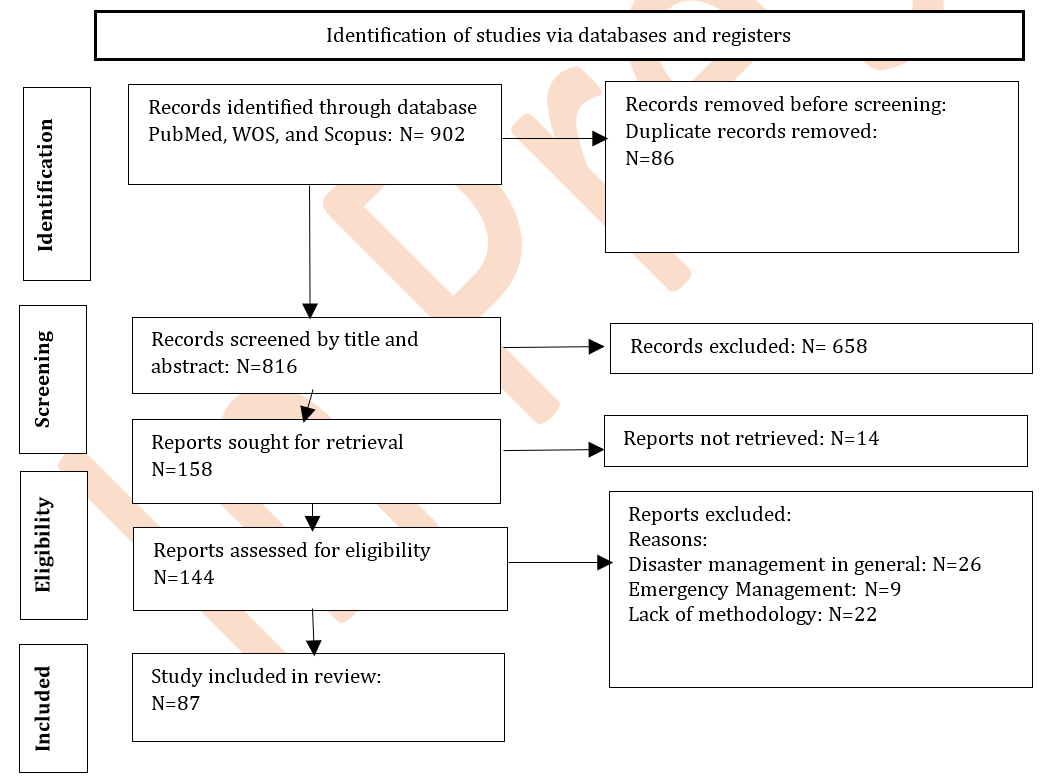
Figure 1. Screening and selection process of studies using the PRISMA flow diagram.
Findings
The collapse or severe weakening of health governance was a recurring pattern across all geographical regions [15–20]. Disruptions in policy formulation, fragmented leadership, lack of coordination among key actors (governments, military structures, and humanitarian organizations), and breakdowns in pharmaceutical and medical supply chains directly undermined service delivery capacity and led to inefficient resource allocation during crises [15, 18, 21–32]. These findings underscore the critical need for pre-established, flexible, and conflict-sensitive health governance mechanisms capable of sustaining core system functions during war and facilitating recovery in the post-conflict phase [27, 33-44].
A sharp increase was observed in demand for emergency and trauma care, coupled with the collapse of routine and preventive services, including immunization, maternal and child healthcare, and continuity of care for non-communicable diseases [45–51]. These patterns have significant operational implications, emphasizing the necessity of adaptive service delivery models such as field hospitals, mobile clinics, surge capacity planning, and the strategic strengthening of primary healthcare as the backbone of wartime service provision [52-59].
Regarding mental health and psychosocial interventions, there was a consistently high prevalence of psychological disorders and point to the relative effectiveness of community-based and digitally enabled interventions [60–67]. From an implementation standpoint, integrating mental health services into primary healthcare packages and leveraging low-cost digital platforms can enhance system responsiveness and coverage in resource-constrained and insecure environments [20, 32, 63, 68, 69].
Regarding vulnerable populations, women, children, older adults, and persons with disabilities disproportionately bear the health consequences of armed conflict [19, 60, 67, 70–73]. Operationally, this necessitates targeted programming, explicit prioritization in resource allocation, and continuous monitoring of equity indicators to prevent the widening of health disparities during and after conflict [74-77].
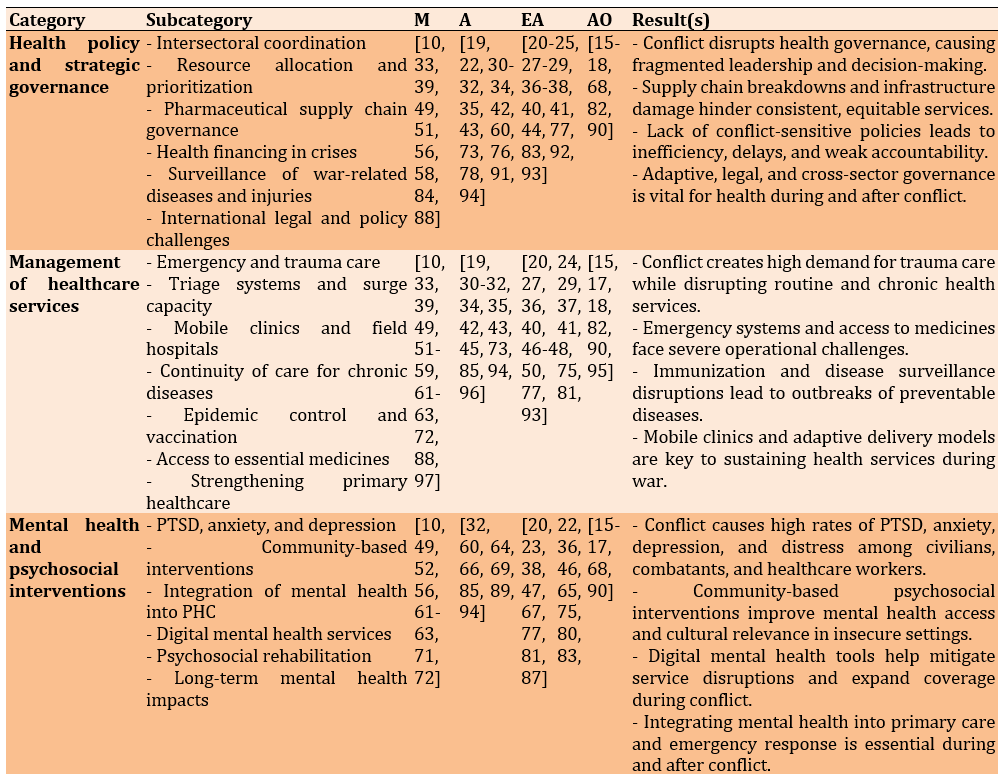
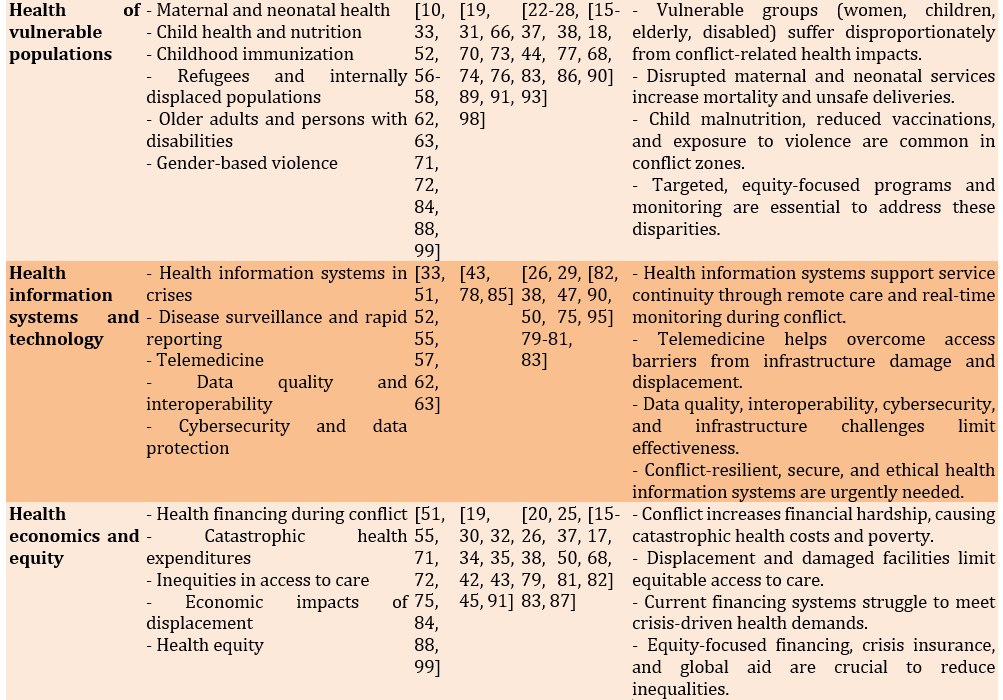
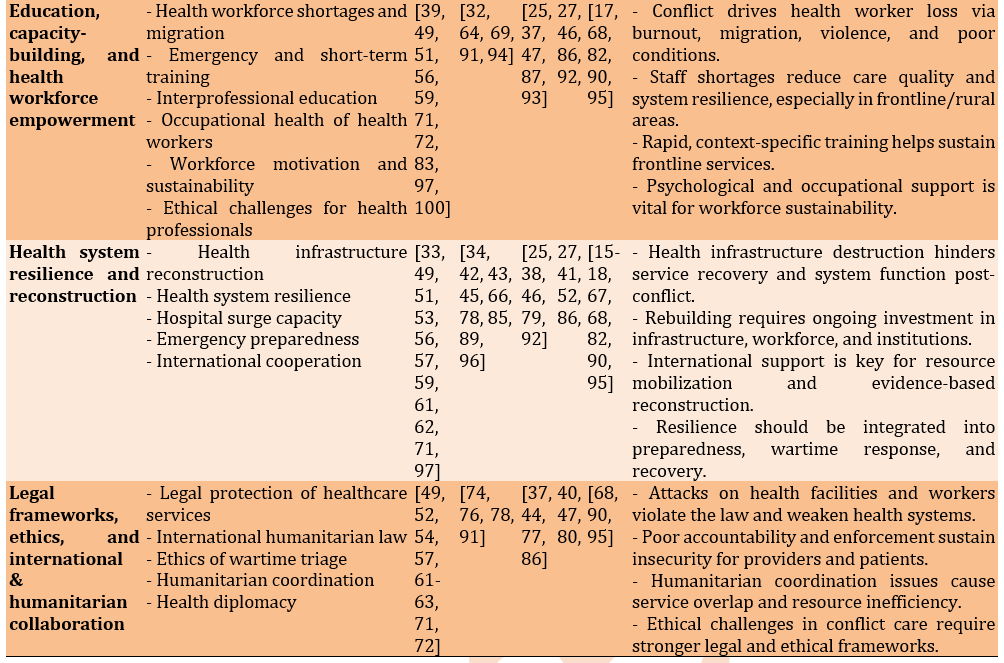
Health information systems and digital technologies play a compensatory role in maintaining service continuity during conflict [26, 75, 78–81]. However, challenges related to data quality, interoperability, cybersecurity, and infrastructure sustainability impose substantial operational constraints [62, 63, 82–85]. Finally, fragmented or short-term interventions were insufficient. Sustainable impact required integrated, evidence-based strategies aligned across all system components (Table 1) [64, 86-97].
Table 1. Summary of the key findings from the included studies (M: Middle East; A: Africa; EA: Europe/Asia; AO: America/Other)
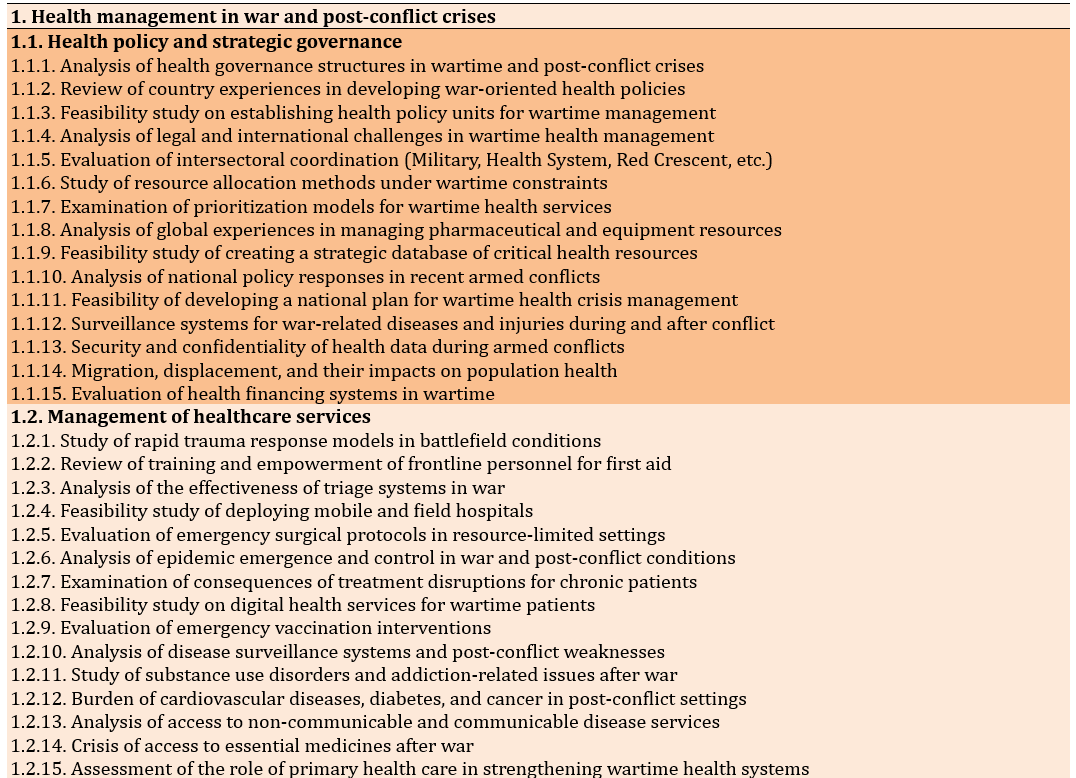
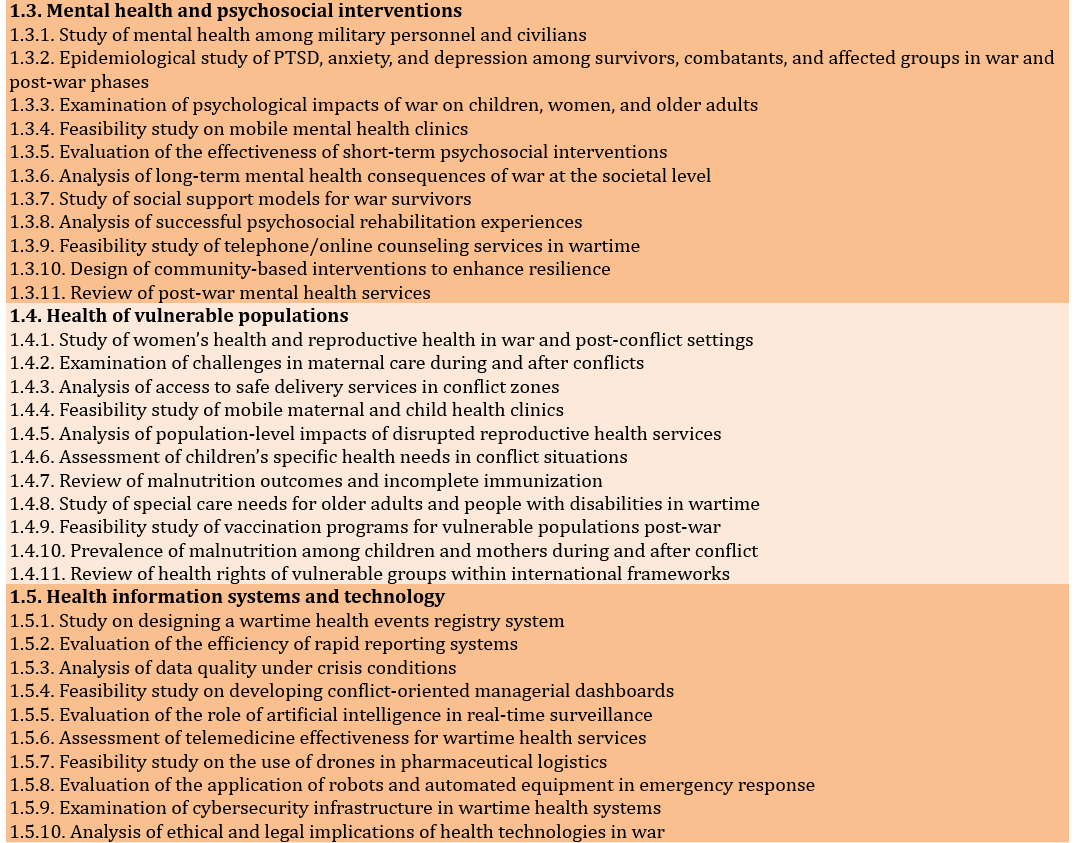
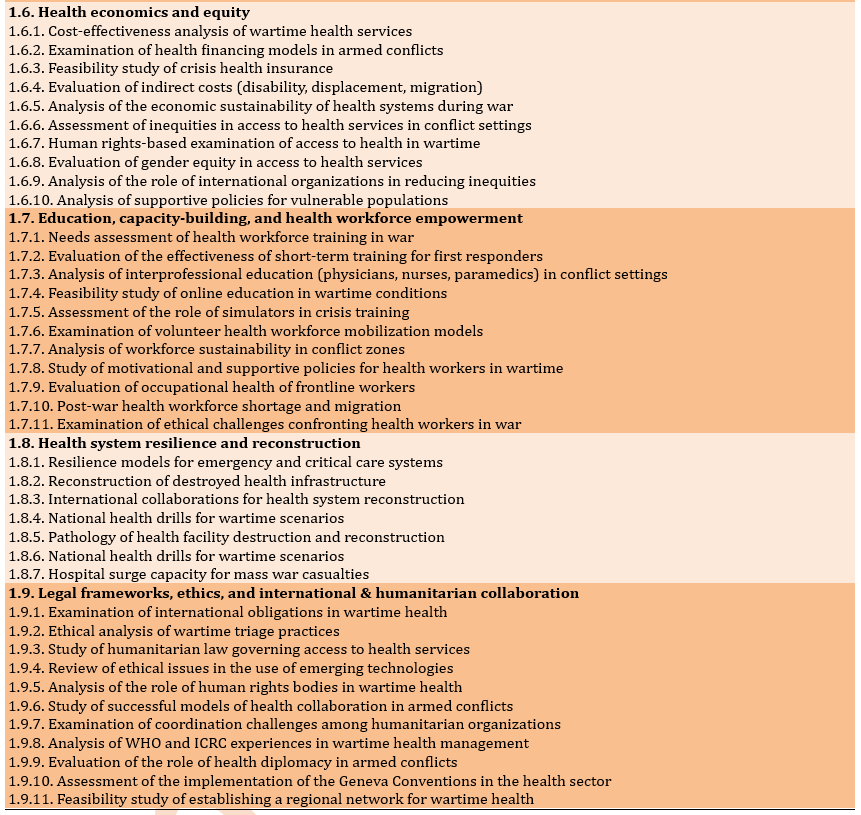
A thematic tree was built to provide a comprehensive conceptual framework for the field of health management in war and post-conflict crises. The sequence of topics and subtopics within this structure did not reflect any inherent hierarchy or prioritization among them. Rather, it is designed solely to facilitate systematic classification and to enhance the understanding of the complexity and multidimensionality of this field. All levels and components are equally important, interacting dynamically and interdependently to form an integrated, holistic perspective essential for managing health in the face of this major global challenge.
Health management in conditions of armed conflict requires a systemic, multi-level perspective in which policy-making, service delivery, human resources, health technology, health economics, and legal considerations dynamically and reciprocally influence one another. Each branch represents an independent intervention domain that is nevertheless highly interdependent with the other domains.
For example, the branch of health governance and policy-making functions as the backbone of the system, and its decisions directly affect the efficiency of service delivery, resource allocation, and intersectoral coordination. In the absence of effective governance, even technically sound interventions are likely to fail. The health services management branch emphasizes an operational focus on rapid response, continuity of essential services, and adaptability to resource constraints.
The sustainability of the health system was not solely dependent on physical infrastructure but also on human and social capital, which play a decisive role. From an implementation perspective, this underscores the necessity of simultaneous investment in the training, psychological support, and motivation of health personnel (Table 2).
Table 2. The thematic framework of health management in war and post-conflict crises
Discussion
This systematic review synthesized empirical evidence from 87 studies conducted between 2015 and 2025 across various domains of health management during war and post-conflict crises in countries such as Yemen, Syria, Ukraine, Afghanistan, the Democratic Republic of Congo, Ethiopia/Tigray, Somalia, Iran, Iraq, Israel, Colombia, Sierra Leone, and others. There were complex, multidimensional challenges, and several priority areas were identified for policy-making, practice, and future research.
Health management in war and post-conflict crises was structured around nine major thematic domains. In the area of health policy and governance, the collapse or severe disruption of health governance structures during wartime and in the post-conflict period is a consistent finding across all settings—from Yemen and Syria to Ukraine [47, 101, 102]. Some studies highlight the fragmentation of health authority, disruptions in the supply chain of essential medicines, and the destruction of infrastructure. Other studies emphasize the absence of coordinated leadership among military, governmental, and humanitarian actors, which often results in inefficient resource allocation. Experiences from countries such as Somalia and Sudan show that weak governance exacerbates health inequities, particularly among internally displaced populations [76, 103]. Several studies underscore the urgent need for pre-established, flexible health governance frameworks that can maintain core functions during conflict and guide the transition to post-conflict recovery.
Regarding health service delivery, the dual burden of trauma care and the collapse of routine health services were found. Studies detail the pressure placed on triage systems and emergency response [82, 104], and others show sharp increases in vaccine-preventable diseases (such as measles and diphtheria) and infectious diseases (such as malaria and diarrheal illnesses) [105, 106]. As demonstrated in studies from Syria and Afghanistan, the management of non-communicable diseases (NCDs), including diabetes, cardiovascular diseases, and cancer, becomes severely disrupted [4, 97]. In studies from South Sudan and Myanmar, the reliance on mobile clinics and the maintenance of the cold chain for vaccines underscore the need for innovative and resilient models of health service delivery [77, 94].
Regarding the mental health and psychosocial support domain, there was a high prevalence of PTSD, anxiety, depression, and psychological distress among civilians, military personnel, and combatants [107, 108]. A promising finding is the effectiveness of community-based psychosocial interventions and the emerging role of digital tools, such as online counseling and virtual reality therapy, as demonstrated in Israel (particularly for healthcare workers) [81]. However, substantial gaps remain in the scalability and long-term sustainability of these interventions, especially in resource-poor settings.
The health of vulnerable populations has been addressed in most studies, showing that women, children, the elderly, and individuals with disabilities bear a disproportionate burden of health inequities [87, 109]. Evidence from Yemen, Tigray, and the Democratic Republic of Congo indicates increases in maternal and neonatal mortality due to disruptions in reproductive health services [110–112]. High rates of child malnutrition and declining vaccination coverage are recurring themes, identified not only during wartime but also as persistent crises in post-conflict periods [6]. Moreover, specific groups—survivors of gender-based violence—face unique and often overlooked health challenges requiring targeted interventions [113].
The pivotal role of technology in sustaining health services emerged as a key insight within health information systems and digital innovation. Studies from Israel highlight the successful use of telemedicine to maintain access to care, including mental health services [38, 81]. However, challenges related to data quality, cybersecurity, and digital infrastructure in crisis settings remain significant barriers [114]. The potential of artificial intelligence for disease surveillance and drones for logistics, though promising, requires further operational research in conflict contexts [115].
Regarding health economics and equity, war leads to catastrophic health expenditures and deepening inequalities [116]. Studies from Sierra Leone and Iraq document how households suffer severe financial hardship or bankruptcy due to healthcare costs [45, 99]. Access to healthcare is severely affected by poverty, displacement, and the destruction of health facilities, creating profound inequities [117]. The economic sustainability of health systems during war and post-conflict periods is also threatened [118].
The systemic crisis in health workforce training and capacity-building was found. Studies report high levels of burnout, migration, and targeted attacks against healthcare workers, resulting in severe shortages of personnel, particularly in rural and conflict-affected regions [91, 119]. There is a clear need for short-term, practical training for frontline workers, as well as strong psychological support mechanisms for the health workforce [120, 121].
Rebuilding health systems requires a long-term commitment to restoring destroyed infrastructure and recovering human resource capacities [122]. Studies stress the importance of international cooperation in providing financial resources and technical assistance [123, 124]. However, recovery efforts are often disrupted by ongoing insecurity and political instability, as seen in Syria [97]. Ultimately, strengthening health systems prior to conflict serves as the foundation for post-conflict resilience [119].
Within legal, ethical, and international cooperation frameworks, widespread violations of international humanitarian law were detected, characterized by repeated attacks on healthcare facilities and personnel, and the lack of accountability for such attacks remains a major challenge [125, 126]. Furthermore, ineffective coordination among humanitarian organizations often leads to duplication of services or inadequate coverage of populations in need. Ethical dilemmas—such as triage decisions during resource scarcity or providing care to individuals with substance use disorders—are insufficiently addressed by existing guidelines [80, 125]. Field evidence from Myanmar specifically demonstrates that displaced children under five years of age have been deprived of essential vaccinations. This deprivation is not only a humanitarian crisis but also a direct violation of the Geneva Conventions, which mandate the provision of essential healthcare for civilians—particularly children—during armed conflict [77]. In such cases, ineffective and delayed cooperation among international organizations has played a major role in perpetuating the crisis.
There were significant knowledge gaps and urgent research needs in health management during war and post-conflict crises. This finding can be directly used as a roadmap for future research. Managing health in war and post-conflict settings requires a fundamental transformation in policy and operational approaches. Health systems in these environments face multidimensional, interlinked challenges that can only be addressed through integrated, proactive strategies. Designing health resilience frameworks, developing unified surveillance systems, strengthening the health workforce, and expanding digital health services are key research priorities in this field.
At the operational level, strengthening primary healthcare, implementing targeted interventions for vulnerable groups, and establishing rapid crisis response systems are essential. At the macro level, developing standardized health governance protocols for crisis settings, ensuring adherence to international obligations, and creating innovative financing models form the essential foundations for rebuilding health systems. Together, these measures can enhance health system resilience and ensure equitable access to healthcare services even under the most challenging conditions.
Conclusion
Effective health management in war and post-conflict settings demands integrated, adaptive approaches that address immediate and long-term needs while prioritizing research to fill critical knowledge gaps and guide transformative policies and strategies.
Acknowledgments: The authors have no acknowledgments to declare.
Ethical Permissions: This study is a systematic review, and therefore, ethical approval was not required.
Conflicts of Interest: There are no conflicts of interest.
Authors' Contribution: Mazhari SR (First Author), Introduction Writer/Methodologist/Main Researcher/Discussion Writer/Statistical Analyst (30%); Najari A (Second Author), Methodologist/Assistant Researcher/Discussion Writer/Statistical Analyst (20%); Sobhani Z (Third Author), Introduction Writer/Assistant Researcher/Discussion Writer (15%); Yarahmadi A (Fourth Author), Assistant Researcher (5%); Latifi M (Fifth Author), Introduction Writer/Methodologist/Main Researcher/Discussion Writer/Statistical Analyst (30%)
Funding/Support: This research received no specific grant from any funding agency in the public, commercial, or not-for-profit sectors.
Armed conflicts, as one of the most complex challenges facing health systems in the contemporary century, not only result in direct human casualties but also leave profound and long-lasting effects on population health through the destruction of health infrastructure, disruption of pharmaceutical and medical supply chains, and erosion of the health workforce [1]. Over the past two decades, the nature of armed conflicts has undergone a significant transformation; modern wars increasingly occur in urban and densely populated areas, deliberately target civilians, and systematically devastate essential infrastructure, including healthcare facilities [2, 3]. These developments have rendered health management in wartime conditions markedly more complex and challenging [4].
According to a recent report by the World Health Organization, more than 70% of war-related mortality results from disruptions in the delivery of essential health services rather than direct combat injuries [5, 6]. This statistic underscores that the impacts of armed conflicts on health indicators extend far beyond acute trauma and manifest through the collapse of primary care systems, the resurgence of preventable diseases, the exacerbation of the burden of non-communicable diseases, and the emergence of long-standing psychosocial crises [7–9]. A study published in The Lancet demonstrates that in countries experiencing prolonged conflict, health indicators may take decades after the cessation of hostilities to return to pre-war levels [10].
The health consequences of armed conflicts can be examined at three levels. The first level includes direct effects, such as war-related trauma, injuries, and disabilities. The second level encompasses indirect effects, including disruptions in access to primary healthcare, maternal and child health services, and disease prevention and control programs, and the third level comprises structural consequences, including the destruction of health systems, the loss of human capital, and the weakening of health governance. These three interrelated layers form a vicious cycle that requires multilayered, integrated interventions to be broken effectively [11-14].
Despite the expansion of studies in this field over the past decade, the existing literature suffers from methodological fragmentation. This fragmentation not only impedes the development of effective policies but also complicates the comparison and synthesis of findings. Moreover, the significant gap between academic research and the practical needs of conflict settings has led many real-world interventions to lack the necessary effectiveness and sustainability. Humanitarian organizations are often forced to act on practical experience with insufficient scientific grounding, while academic research frequently remains confined to scholarly publications and fails to translate into practice.
One of the main challenges in this field lies in the dynamic and evolving nature of contemporary conflicts. Modern wars are characterized by prolonged duration, asymmetric tactics, intentional targeting of healthcare facilities, and the deployment of new weaponry. These characteristics have transformed health management in war settings into a domain that requires continuous reassessment and up-to-date knowledge.
This systematic review sought to synthesize and critically analyze existing evidence and to propose a comprehensive, structured framework for health management during war and post-conflict crises. The primary goal was to identify emerging research priorities in this domain and develop a roadmap to guide future applied research, serving as an efficient tool for policymakers, health system managers, and humanitarian organizations to design evidence-based, impactful responses in the most critical circumstances.
Information and Methods
This systematic review was conducted and reported in accordance with the Preferred Reporting Items for Systematic Reviews and Meta-Analyses (PRISMA) 2020 guidelines. The population, intervention, comparator, outcomes, and study design (PICOS) framework was defined, with the population comprising communities and human groups affected by war and post-conflict crises. The intervention comprised strategies and interventions related to health management, including physical, psychological, social, and organizational aspects. The comparator was the absence of intervention or, when applicable, alternative interventions. Outcomes focused on improvements in physical and mental health, rehabilitation, strengthening of the health system, equity in access, health resilience, and related measures. The study design encompassed quantitative, qualitative, and mixed-method studies.
Data were collected through a systematic search of leading international scientific databases, including PubMed/MEDLINE, Scopus, and Web of Science (WoS). The search strategy was developed using a combination of keywords and relevant MeSH terms and included TS= ("Health Management" OR "Healthcare Management" OR "Health Services Management" OR "Health Services Administration" OR "Health Policy" OR "Health Planning" OR "Health System*" OR "Healthcare System*" OR "Medical Services" OR "Health Governance") AND ("War" OR "Warfare" OR "Armed Conflict*" OR "Military Medicine" OR "Combat Zone*" OR "Battlefield*" OR "Post-Conflict" OR "Wartime" OR "War-related" OR "Post-Armed Conflict* Health Crisis" OR "Post-war Health Crisis").
Inclusion criteria were English-language studies examining health management in war and post-conflict crises published between 2015 and 2025, quantitative, qualitative, and mixed-method studies, and original research published in reputable journals with full-text availability. Articles focusing solely on short-term war outcomes without addressing the post-conflict phase, articles without full-text access, and non-scientific studies or those lacking a clear methodological framework were not included.
The data analysis process was conducted in two stages. Stage 1 was the screening and selection of studies, carried out independently by two researchers in three steps: screening titles and abstracts, full-text review of eligible studies, and resolution of disagreements through consultation with a third researcher. EndNote X9 software was used to manage references and remove duplicates. Stage 2 was data extraction using a standardized extraction form developed by the research team. Extracted information included bibliographic characteristics of the study (author, year of publication, country), study design and methodology, study population and research context, type of health intervention and management strategies (if applicable), measured outcomes, and main findings. Of the 900 studies initially identified, 87 met the inclusion criteria and were selected for the review (Figure 1).
Figure 1. Screening and selection process of studies using the PRISMA flow diagram.
Findings
The collapse or severe weakening of health governance was a recurring pattern across all geographical regions [15–20]. Disruptions in policy formulation, fragmented leadership, lack of coordination among key actors (governments, military structures, and humanitarian organizations), and breakdowns in pharmaceutical and medical supply chains directly undermined service delivery capacity and led to inefficient resource allocation during crises [15, 18, 21–32]. These findings underscore the critical need for pre-established, flexible, and conflict-sensitive health governance mechanisms capable of sustaining core system functions during war and facilitating recovery in the post-conflict phase [27, 33-44].
A sharp increase was observed in demand for emergency and trauma care, coupled with the collapse of routine and preventive services, including immunization, maternal and child healthcare, and continuity of care for non-communicable diseases [45–51]. These patterns have significant operational implications, emphasizing the necessity of adaptive service delivery models such as field hospitals, mobile clinics, surge capacity planning, and the strategic strengthening of primary healthcare as the backbone of wartime service provision [52-59].
Regarding mental health and psychosocial interventions, there was a consistently high prevalence of psychological disorders and point to the relative effectiveness of community-based and digitally enabled interventions [60–67]. From an implementation standpoint, integrating mental health services into primary healthcare packages and leveraging low-cost digital platforms can enhance system responsiveness and coverage in resource-constrained and insecure environments [20, 32, 63, 68, 69].
Regarding vulnerable populations, women, children, older adults, and persons with disabilities disproportionately bear the health consequences of armed conflict [19, 60, 67, 70–73]. Operationally, this necessitates targeted programming, explicit prioritization in resource allocation, and continuous monitoring of equity indicators to prevent the widening of health disparities during and after conflict [74-77].
Health information systems and digital technologies play a compensatory role in maintaining service continuity during conflict [26, 75, 78–81]. However, challenges related to data quality, interoperability, cybersecurity, and infrastructure sustainability impose substantial operational constraints [62, 63, 82–85]. Finally, fragmented or short-term interventions were insufficient. Sustainable impact required integrated, evidence-based strategies aligned across all system components (Table 1) [64, 86-97].
Table 1. Summary of the key findings from the included studies (M: Middle East; A: Africa; EA: Europe/Asia; AO: America/Other)
A thematic tree was built to provide a comprehensive conceptual framework for the field of health management in war and post-conflict crises. The sequence of topics and subtopics within this structure did not reflect any inherent hierarchy or prioritization among them. Rather, it is designed solely to facilitate systematic classification and to enhance the understanding of the complexity and multidimensionality of this field. All levels and components are equally important, interacting dynamically and interdependently to form an integrated, holistic perspective essential for managing health in the face of this major global challenge.
Health management in conditions of armed conflict requires a systemic, multi-level perspective in which policy-making, service delivery, human resources, health technology, health economics, and legal considerations dynamically and reciprocally influence one another. Each branch represents an independent intervention domain that is nevertheless highly interdependent with the other domains.
For example, the branch of health governance and policy-making functions as the backbone of the system, and its decisions directly affect the efficiency of service delivery, resource allocation, and intersectoral coordination. In the absence of effective governance, even technically sound interventions are likely to fail. The health services management branch emphasizes an operational focus on rapid response, continuity of essential services, and adaptability to resource constraints.
The sustainability of the health system was not solely dependent on physical infrastructure but also on human and social capital, which play a decisive role. From an implementation perspective, this underscores the necessity of simultaneous investment in the training, psychological support, and motivation of health personnel (Table 2).
Table 2. The thematic framework of health management in war and post-conflict crises
Discussion
This systematic review synthesized empirical evidence from 87 studies conducted between 2015 and 2025 across various domains of health management during war and post-conflict crises in countries such as Yemen, Syria, Ukraine, Afghanistan, the Democratic Republic of Congo, Ethiopia/Tigray, Somalia, Iran, Iraq, Israel, Colombia, Sierra Leone, and others. There were complex, multidimensional challenges, and several priority areas were identified for policy-making, practice, and future research.
Health management in war and post-conflict crises was structured around nine major thematic domains. In the area of health policy and governance, the collapse or severe disruption of health governance structures during wartime and in the post-conflict period is a consistent finding across all settings—from Yemen and Syria to Ukraine [47, 101, 102]. Some studies highlight the fragmentation of health authority, disruptions in the supply chain of essential medicines, and the destruction of infrastructure. Other studies emphasize the absence of coordinated leadership among military, governmental, and humanitarian actors, which often results in inefficient resource allocation. Experiences from countries such as Somalia and Sudan show that weak governance exacerbates health inequities, particularly among internally displaced populations [76, 103]. Several studies underscore the urgent need for pre-established, flexible health governance frameworks that can maintain core functions during conflict and guide the transition to post-conflict recovery.
Regarding health service delivery, the dual burden of trauma care and the collapse of routine health services were found. Studies detail the pressure placed on triage systems and emergency response [82, 104], and others show sharp increases in vaccine-preventable diseases (such as measles and diphtheria) and infectious diseases (such as malaria and diarrheal illnesses) [105, 106]. As demonstrated in studies from Syria and Afghanistan, the management of non-communicable diseases (NCDs), including diabetes, cardiovascular diseases, and cancer, becomes severely disrupted [4, 97]. In studies from South Sudan and Myanmar, the reliance on mobile clinics and the maintenance of the cold chain for vaccines underscore the need for innovative and resilient models of health service delivery [77, 94].
Regarding the mental health and psychosocial support domain, there was a high prevalence of PTSD, anxiety, depression, and psychological distress among civilians, military personnel, and combatants [107, 108]. A promising finding is the effectiveness of community-based psychosocial interventions and the emerging role of digital tools, such as online counseling and virtual reality therapy, as demonstrated in Israel (particularly for healthcare workers) [81]. However, substantial gaps remain in the scalability and long-term sustainability of these interventions, especially in resource-poor settings.
The health of vulnerable populations has been addressed in most studies, showing that women, children, the elderly, and individuals with disabilities bear a disproportionate burden of health inequities [87, 109]. Evidence from Yemen, Tigray, and the Democratic Republic of Congo indicates increases in maternal and neonatal mortality due to disruptions in reproductive health services [110–112]. High rates of child malnutrition and declining vaccination coverage are recurring themes, identified not only during wartime but also as persistent crises in post-conflict periods [6]. Moreover, specific groups—survivors of gender-based violence—face unique and often overlooked health challenges requiring targeted interventions [113].
The pivotal role of technology in sustaining health services emerged as a key insight within health information systems and digital innovation. Studies from Israel highlight the successful use of telemedicine to maintain access to care, including mental health services [38, 81]. However, challenges related to data quality, cybersecurity, and digital infrastructure in crisis settings remain significant barriers [114]. The potential of artificial intelligence for disease surveillance and drones for logistics, though promising, requires further operational research in conflict contexts [115].
Regarding health economics and equity, war leads to catastrophic health expenditures and deepening inequalities [116]. Studies from Sierra Leone and Iraq document how households suffer severe financial hardship or bankruptcy due to healthcare costs [45, 99]. Access to healthcare is severely affected by poverty, displacement, and the destruction of health facilities, creating profound inequities [117]. The economic sustainability of health systems during war and post-conflict periods is also threatened [118].
The systemic crisis in health workforce training and capacity-building was found. Studies report high levels of burnout, migration, and targeted attacks against healthcare workers, resulting in severe shortages of personnel, particularly in rural and conflict-affected regions [91, 119]. There is a clear need for short-term, practical training for frontline workers, as well as strong psychological support mechanisms for the health workforce [120, 121].
Rebuilding health systems requires a long-term commitment to restoring destroyed infrastructure and recovering human resource capacities [122]. Studies stress the importance of international cooperation in providing financial resources and technical assistance [123, 124]. However, recovery efforts are often disrupted by ongoing insecurity and political instability, as seen in Syria [97]. Ultimately, strengthening health systems prior to conflict serves as the foundation for post-conflict resilience [119].
Within legal, ethical, and international cooperation frameworks, widespread violations of international humanitarian law were detected, characterized by repeated attacks on healthcare facilities and personnel, and the lack of accountability for such attacks remains a major challenge [125, 126]. Furthermore, ineffective coordination among humanitarian organizations often leads to duplication of services or inadequate coverage of populations in need. Ethical dilemmas—such as triage decisions during resource scarcity or providing care to individuals with substance use disorders—are insufficiently addressed by existing guidelines [80, 125]. Field evidence from Myanmar specifically demonstrates that displaced children under five years of age have been deprived of essential vaccinations. This deprivation is not only a humanitarian crisis but also a direct violation of the Geneva Conventions, which mandate the provision of essential healthcare for civilians—particularly children—during armed conflict [77]. In such cases, ineffective and delayed cooperation among international organizations has played a major role in perpetuating the crisis.
There were significant knowledge gaps and urgent research needs in health management during war and post-conflict crises. This finding can be directly used as a roadmap for future research. Managing health in war and post-conflict settings requires a fundamental transformation in policy and operational approaches. Health systems in these environments face multidimensional, interlinked challenges that can only be addressed through integrated, proactive strategies. Designing health resilience frameworks, developing unified surveillance systems, strengthening the health workforce, and expanding digital health services are key research priorities in this field.
At the operational level, strengthening primary healthcare, implementing targeted interventions for vulnerable groups, and establishing rapid crisis response systems are essential. At the macro level, developing standardized health governance protocols for crisis settings, ensuring adherence to international obligations, and creating innovative financing models form the essential foundations for rebuilding health systems. Together, these measures can enhance health system resilience and ensure equitable access to healthcare services even under the most challenging conditions.
Conclusion
Effective health management in war and post-conflict settings demands integrated, adaptive approaches that address immediate and long-term needs while prioritizing research to fill critical knowledge gaps and guide transformative policies and strategies.
Acknowledgments: The authors have no acknowledgments to declare.
Ethical Permissions: This study is a systematic review, and therefore, ethical approval was not required.
Conflicts of Interest: There are no conflicts of interest.
Authors' Contribution: Mazhari SR (First Author), Introduction Writer/Methodologist/Main Researcher/Discussion Writer/Statistical Analyst (30%); Najari A (Second Author), Methodologist/Assistant Researcher/Discussion Writer/Statistical Analyst (20%); Sobhani Z (Third Author), Introduction Writer/Assistant Researcher/Discussion Writer (15%); Yarahmadi A (Fourth Author), Assistant Researcher (5%); Latifi M (Fifth Author), Introduction Writer/Methodologist/Main Researcher/Discussion Writer/Statistical Analyst (30%)
Funding/Support: This research received no specific grant from any funding agency in the public, commercial, or not-for-profit sectors.
Keywords:
References
1. Ghafoori N, Yolchi J. The impact of armed conflicts on child-related sustainable development goals: A panel analysis of 54 countries. Int Peacekeep. 2026:1-31. [Link] [DOI:10.1080/13533312.2026.2638298]
2. Kaźmierski R. Brain injury mobile diagnostic system: Applications in civilian medical service and on the battlefield-General concept and medical aspects. J Clin Ultrasound. 2023;51(9):1598-606. [Link] [DOI:10.1002/jcu.23545]
3. Lubkowski P, Krygier J, Sondej T, Dobrowolski AP, Apiecionek L, Znaniecki W, et al. Decision support system proposal for medical evacuations in military operations. Sensors. 2023;23(11):5144. [Link] [DOI:10.3390/s23115144]
4. Edward A, Osei-Bonsu K, Branchini C, Yarghal TS, Arwal SH, Naeem AJ. Enhancing governance and health system accountability for people centered healthcare: An exploratory study of community scorecards in Afghanistan. BMC Health Serv Res. 2015;15(1):299. [Link] [DOI:10.1186/s12913-015-0946-5]
5. Markowski J. Turf wars: How growth and competitive shocks have affected the performance and stability of community health centers. Milbank Q. 2025;103(3):779-808. [Link] [DOI:10.1111/1468-0009.70031]
6. Rabayaa M. Beyond the battlefield: An analysis of the war-related health impacts in the Gaza strip, Palestine. Front Public Health. 2026;14:1739474. [Link] [DOI:10.3389/fpubh.2026.1739474]
7. Harrell M, Selvaraj SA, Edgar M. Danger! Crisis health workers at risk. Int J Environ Res Public Health. 2020;17(15):5270. [Link] [DOI:10.3390/ijerph17155270]
8. Jankowski M, Lazarus JV, Kuchyn I, Zemskov S, Gałązkowski R, Gujski M. One year on: Poland's public health initiatives and national response to millions of refugees from Ukraine. Med Sci Monit Int Med J Exp Clin Res. 2023;29:e940223-1. [Link] [DOI:10.12659/MSM.940223]
9. Aitblal H. Invisible harm in a visible war: A thematic analysis of slow violence and engaged vulnerability in the denial of children's health rights in Gaza. Gothenburg: University of Gothenburg; 2026. [Link]
10. Dewachi O, Skelton M, Nguyen VK, Fouad FM, Sitta GA, Maasri Z, et al. Changing therapeutic geographies of the Iraqi and Syrian wars. Lancet. 2014;383(9915):449-57. [Link] [DOI:10.1016/S0140-6736(13)62299-0]
11. Misganaw A, Naghavi M, Walker A, Mirkuzie AH, Giref AZ, Berheto TM, et al. Progress in health among regions of Ethiopia, 1990-2019: A subnational country analysis for the Global Burden of Disease Study 2019. Lancet. 2022;399(10332):1322-35. [Link] [DOI:10.1016/S0140-6736(21)02868-3]
12. Tiruneh A, Yetneberk T, Teshome D, Fenta E. The effect of war on the health system, mental health, maternal health, and other war-related health issues in northern Ethiopia from 2020 to 2025: A narrative review. Ethics Med Public Health. 2026;34:101215. [Link] [DOI:10.1016/j.jemep.2025.101215]
13. Ismail A, Salah M, Gilbert M, Abu Alreesh YH, Jones C. Rebuilding Gaza's health system: A qualitative study of healthcare workers' experiences and lessons learned from responding to mass casualty incidents (2018-2021). PLoS One. 2026;21(2):e0342654. [Link] [DOI:10.1371/journal.pone.0342654]
14. Al-Hroub A. Death anxiety and trauma in forcibly displaced children in the Gaza strip: A critical review of emerging research, 2024-2025. Curr Psychiatry Rep. 2026;28(1):21. [Link] [DOI:10.1007/s11920-026-01670-8]
15. Chin DL, Zeber JE. Mental health outcomes among military service members after severe injury in combat and TBI. Mil Med. 2020;185(5-6):e711-8. [Link] [DOI:10.1093/milmed/usz440]
16. Melcer T, Walker J, Sazon J, Domasing R, Perez K, Bhatnagar V, et al. Outpatient pharmacy prescriptions during the first year following serious combat injury: A retrospective analysis. Mil Med. 2020;185(7-8):e1091-100. [Link] [DOI:10.1093/milmed/usaa038]
17. Sanguineti MCD, Fonseca L, Burgess RA, Concha N, González M, San Juan NV, et al. Resisting epistemic violence in global mental health: Listening to local understandings of mental health and emotional distress among victims and ex-guerrilla members in Southern Colombia. SSM Ment Health. 2025;7:100385. [Link] [DOI:10.1016/j.ssmmh.2024.100385]
18. Weber S, Carranza F, Rengifo JR, Romero C, Arrieta S, Martínez K, et al. Mapping mental health care services for children and youth population in Colombia's Pacific: Potential for boundary spanning between community and formal services. Int J Ment Health Syst. 2024;18(1):9. [Link] [DOI:10.1186/s13033-024-00626-w]
19. Adams B, Vallières F, Duncan JA, Higgins A, Eaton J. Stakeholder perspectives of community mental health forums: A qualitative study in Sierra Leone. Int J Ment Health Syst. 2020;14(1):50. [Link] [DOI:10.1186/s13033-020-00382-7]
20. Haque U, Naeem A, Wang S, Espinoza J, Holovanova I, Gutor T, et al. The human toll and humanitarian crisis of the Russia-Ukraine war: The first 162 days. BMJ Glob Health. 2022;7(9):e009550. [Link] [DOI:10.1136/bmjgh-2022-009550]
21. Bertone MP, Martins JS, Pereira SM, Martineau T, Alonso-Garbayo A. Understanding HRH recruitment in post-conflict settings: An analysis of central-level policies and processes in Timor-Leste (1999-2018). Hum Resour Health. 2018;16(1):66. [Link] [DOI:10.1186/s12960-018-0325-5]
22. Fried DA, Rajan M, Tseng Cl, Helmer D. Impact of presumed service-connected diagnosis on the Department of Veterans Affairs healthcare utilization patterns of Vietnam-Theater Veterans: A cross-sectional study. Medicine. 2018;97(19):e0662. [Link] [DOI:10.1097/MD.0000000000010662]
23. Lazarus L, McClarty LM, Herpai N, Pavlova D, Tarasova T, Gnatenko A, et al. "… because the social work never ends": A qualitative study exploring how NGOs responded to emerging needs while upholding responsibility to HIV prevention and treatment during the war in Ukraine. J Int AIDS Soc. 2024;27:e26309. [Link] [DOI:10.1002/jia2.26309]
24. Naeemi S, Hofiani SMS, Frogh AK, Niazy SMR, Mirzazadeh A, Sadaat SI, et al. Psychological distress among healthcare workers in Kabul following the 2021 transition. Confl Health. 2025;19(1):59. [Link] [DOI:10.1186/s13031-025-00702-z]
25. Rudenko S, Tasenko M. Improving the diagnosis of post-traumatic stress disorder and anxiety-depressive disorders using the methods of phenomenological philosophy: Experience of interdisciplinary practices in Ukraine. STUDIA WARMIŃSKIE. 2024;61:127-38. [Link] [DOI:10.31648/sw.10789]
26. Bury G, Fitzpatrick C, Heron B, Cullen W, Scully E, Kachurets K, et al. Ukraine trauma project: The feasibility of introducing advanced trauma-care skills to frontline emergency medical services responders. BMJ Open. 2023;13(11):e077895. [Link] [DOI:10.1136/bmjopen-2023-077895]
27. Chamie K, DeVere White RW, Lee D, Ok J, Ellison LM. Agent orange exposure, Vietnam war veterans, and the risk of prostate cancer. Cancer. 2008;113(9):2464-70. [Link] [DOI:10.1002/cncr.23695]
28. Sirotchenko T, Karamaneshta M. Changes in the main epidemiological indicators of type 1 diabetes mellitus in the children's population of the Luhansk People's Republic in 2010-2021. Diabetes Mellit. 2025;28(2):104-10. [Link] [DOI:10.14341/DM13121]
29. Weinreich KJ, Frankova I, Maksymets N, Barbui C, Klymchuk V, Mooren T, et al. Implementing scalable face-to-face and digital interventions among forcibly displaced persons from Ukraine in Europe: Protocol of the U-RISE project. Eur J Psychotraumatol. 2025;16(1):2468117. [Link] [DOI:10.1080/20008066.2025.2468117]
30. Gerstl S, Sauter J, Kasanda J, Kinzelbach A. Who can afford health care? Evaluating the socio-economic conditions and the ability to contribute to health care in a post-conflict area in DR Congo. PLoS One. 2013;8(10):e77382. [Link] [DOI:10.1371/journal.pone.0077382]
31. Tunçalp Ö, Fall IS, Phillips SJ, Williams I, Sacko M, Touré OB, et al. Conflict, displacement and sexual and reproductive health services in Mali: Analysis of 2013 health resources availability mapping system (HeRAMS) survey. Confl Health. 2015;9(1):28. [Link] [DOI:10.1186/s13031-015-0051-8]
32. Varpilah ST, Safer M, Frenkel E, Baba D, Massaquoi M, Barrow G. Rebuilding human resources for health: A case study from Liberia. Hum Resour Health. 2011;9(1):11. [Link] [DOI:10.1186/1478-4491-9-11]
33. Al-Dar AA, Al-Qassimi M, Ezzadeen FH, Qassime M, Al Murtadha AM, Ghaleb Y. Diphtheria resurgence in Sada'a-Yemen, 2017-2020. BMC Infect Diseases. 2022;22(1):46. [Link] [DOI:10.1186/s12879-022-07033-x]
34. Dean L, Theobald S, Nallo G, Bettee A, Kollie K, Tolhurst R. A syndemic born of war: Combining intersectionality and structural violence to explore the biosocial interactions of neglected tropical diseases, disability and mental distress in Liberia. PLoS Glob Public Health. 2022;2(6):e0000551. [Link] [DOI:10.1371/journal.pgph.0000551]
35. Gebrekidan A, Haftu H, Hailu BY, Zenebe D, Gebremedhin M, Abraha HE, et al. The effect of war and siege on children with diabetes admitted to Ayder comprehensive specialized hospital in Mekelle, Tigray, Ethiopia: A cross-sectional study. Sci Rep. 2024;14(1):25007. [Link] [DOI:10.1038/s41598-024-76516-5]
36. Hemat H, Shah S, Isaakidis P, Das M, Kyaw NTT, Zaheer S, et al. Before the bombing: High burden of traumatic injuries in Kunduz trauma center, Kunduz, Afghanistan. PLoS One. 2017;12(3):e0165270. [Link] [DOI:10.1371/journal.pone.0165270]
37. Karim AM, Hussain I, Malik SK, Lee JH, Cho IH, Kim YB, et al. Epidemiology and clinical burden of malaria in the war-torn area, Orakzai Agency in Pakistan. PLoS Negl Trop Diseases. 2016;10(1):e0004399. [Link] [DOI:10.1371/journal.pntd.0004399]
38. Kramer A, Brunstein-Klomek A, Neuthal N, Nakash Bar T, Tzur Bitan D. Professional and service-user perspectives regarding the future of mental healthcare in Israel. Isr J Health Policy Res. 2025;14(1):48. [Link] [DOI:10.1186/s13584-025-00710-7]
39. Leidman E, Maliniak M, Sultan ASS, Hassan A, Hussain SJ, Bilukha OO. Road traffic fatalities in selected governorates of Iraq from 2010 to 2013: Prospective surveillance. Confl Health. 2016;10(1):2. [Link] [DOI:10.1186/s13031-016-0070-0]
40. Nakken C, Skovdal M, Nellums L, Friedland J, Hargreaves S, Norredam M. Vaccination status and needs of asylum-seeking children in Denmark: A retrospective data analysis. Public Health. 2018;158:110-6. [Link] [DOI:10.1016/j.puhe.2018.02.018]
41. Owczarzak J, Monton O, Fuller S, Burlaka J, Kiriazova T, Morozova O, et al. "Will you need this health at all? Will you be alive?": Using the bioecological model of mass trauma to understand HIV care experiences during the war in Ukraine. J Int AIDS Soc. 2024;27:e26307. [Link] [DOI:10.1002/jia2.26307]
42. Walton M, Hall J, Van Ogtrop F, Guest D, Black K, Beardsley J, et al. The extent to which the domestic conditions of cocoa farmers in Bougainville impede livelihoods. One Health. 2020;10:100142. [Link] [DOI:10.1016/j.onehlt.2020.100142]
43. Wurie HR, Samai M, Witter S. Retention of health workers in rural Sierra Leone: Findings from life histories. Hum Resour Health. 2016;14(1):3. [Link] [DOI:10.1186/s12960-016-0099-6]
44. Zafar S, Sikander S, Hamdani SU, Atif N, Akhtar P, Nazir H, et al. The effectiveness of technology-assisted cascade training and supervision of community health workers in delivering the thinking healthy program for perinatal depression in a post-conflict area of Pakistan-study protocol for a randomized controlled trial. Trials. 2016;17(1):188. [Link] [DOI:10.1186/s13063-016-1308-2]
45. Edoka I, McPake B, Ensor T, Amara R, Edem-Hotah J. Changes in catastrophic health expenditure in post-conflict Sierra Leone: An Oaxaca-blinder decomposition analysis. Int J Equity Health. 2017;16(1):166. [Link] [DOI:10.1186/s12939-017-0661-4]
46. Fujii S, Kunii Y, Nonaka S, Hamaie Y, Hino M, Egawa S, et al. Real-time prediction of medical demand and mental health status in Ukraine under Russian invasion using tweet analysis. Tohoku J Exp Med. 2023;259(3):177-88. [Link] [DOI:10.1620/tjem.2022.J111]
47. Kukharuk O, Tkalich K, Kamash N, Georgiou O. Effectiveness of immersive VR therapy in reducing stress-associated symptoms in Ukraine. Eur J Psychotraumatol. 2025;16(1):2488097. [Link] [DOI:10.1080/20008066.2025.2488097]
48. Leoniuk K, Sobczak K, Kamińska-Skrzyńska W, Janaszczyk A. Midwives' experiences of caring for Ukrainian war refugees: A qualitative study. Risk Manag Healthc Policy. 2025:2505-14. [Link] [DOI:10.2147/RMHP.S524572]
49. Nassar AAH, Al Amad MA, Qasim M, Dureab F. Risk factors for measles outbreak in Ataq and Habban districts, Shabwah governorate, Yemen, February to May 2018. BMC Infect Diseases. 2021;21(1):551. [Link] [DOI:10.1186/s12879-021-06207-3]
50. Pruginin I, Segal-Engelchin D, Isralowitz R, Reznik A. Shared war reality effects on the professional quality of life of mental health professionals. Israel J Health Policy Research. 2016;5(1):17. [Link] [DOI:10.1186/s13584-016-0075-6]
51. Soqia J, Yakoub-Agha L, Mohamad L, Alhomsi R, Shamaa MA, Yazbek A, et al. Syrian crises effect on specialty choice and the decision to work in the country among residents of six major hospitals in Syria, Damascus. PLoS One. 2024;19(2):e0295310. [Link] [DOI:10.1371/journal.pone.0295310]
52. Al-Dahir S, Hasan TA, Khalil A, Moss WJ, Talaat KR, Knoll MD, et al. Changes in healthcare seeking behaviors among caretakers of children in the previously occupied ISIS territory: Hadeetha, Anbar, Iraq: A cross-sectional survey of 415 households. Confl Health. 2024;18(1):64. [Link] [DOI:10.1186/s13031-024-00622-4]
53. Haar RJ, Risko CB, Singh S, Rayes D, Albaik A, Alnajar M, et al. Determining the scope of attacks on health in four governorates of Syria in 2016: Results of a field surveillance program. PLoS Med. 2018;15(4):e1002559. [Link] [DOI:10.1371/journal.pmed.1002559]
54. Hosseini M, Allami M, Soroush M, Babaha F, Minooeefar J, Rahimpoor D. Chronic traumatic ankle and foot osteomyelitis: A nationwide case-control study. Mil Med Res. 2018;5(1):15. [Link] [DOI:10.1186/s40779-018-0163-8]
55. Hussein RA, Suprenant MP, Al-Dheeb N, Guerrero S, Rogers E, Shafique F, et al. A mathematical model to estimate the incidence of child wasting in Yemen. Confl Health. 2021;15(1):62. [Link] [DOI:10.1186/s13031-021-00400-6]
56. Lafferty M, Winchell K, Cottrell E, Knight S, Nugent SM. Women of the Gulf War: Understanding their military and health experiences over 30 years. Mil Med. 2023;188(9-10):3191-8. [Link] [DOI:10.1093/milmed/usac283]
57. Nahhat F, Doyya M, Zabad K, Laban TA, Najjar H, Saifo M, et al. Breast cancer quality of care in Syria: Screening, diagnosis, and staging. BMC Cancer. 2023;23(1):1234. [Link] [DOI:10.1186/s12885-023-11740-2]
58. Shedaiwah S, Alsharabi H, Anam L, Al Amad MA. Risk factors of diphtheria outbreak in Damt district of Al Dhalea Governorate, 2023-Yemen: A case-control study. BMC Infect Dis. 2024;24(1):1034. [Link] [DOI:10.1186/s12879-024-09932-7]
59. Torbosh A, Al Amad MA, Al Serouri A, Khader Y. The impact of war in Yemen on immunization coverage of children under one year of age: Descriptive study. JMIR Public Health Surveill. 2019;5(4):e14461. [Link] [DOI:10.2196/14461]
60. Aden JA, Ahmed HJ, Östergren PO. Causes and contributing factors of maternal mortality in Bosaso District of Somalia. A retrospective study of 30 cases using a Verbal Autopsy approach. Glob Health Action. 2019;12(1):1672314. [Link] [DOI:10.1080/16549716.2019.1672314]
61. Al-Samhari GA, Al-Mushiki GM, Tamrakar R, Lin YD, Al-Shaebi F, Akroot MA, et al. Prevalence, aetiology, vaccination coverage and spatio-temporal pattern among patients admitted with acute bacterial meningitis to the sentinel hospital surveillance network in Yemen, 2014-20, before and during the civil war. Int J Epidemiol. 2023;52(4):1175-86. [Link] [DOI:10.1093/ije/dyad047]
62. Alnasser AA, Darwish M, Aldbis A, Polinori C, Elnakib S, Bellizzi S, et al. Renewable resilience in conflict: Lessons learned from Syria's solar-powered electric health vehicles. Front Public Health. 2025;13:1560063. [Link] [DOI:10.3389/fpubh.2025.1560063]
63. Baatz RK, Ekzayez A, Najib Y, Alkhalil M, Salem M, Alshiekh MA, et al. Vaccination governance in protracted conflict settings: The case of northwest Syria. BMC Health Serv Res. 2024;24(1):1056. [Link] [DOI:10.1186/s12913-024-11413-1]
64. Berihu BA, Mulugeta A, Magana T, Tessema M, Gebreegziabher T, Berhe Y, et al. Neural tube defects in a war-torn Tigray regional state of Ethiopia: A retrospective study of 54,626 deliveries. BMC Pregnancy Childbirth. 2025;25(1):108. [Link] [DOI:10.1186/s12884-025-07254-3]
65. Korzeniewski K, Richert W, Marchelek-Myśliwiec M. Intestinal parasitic infections in Ukrainian war refugee children living in Poland. Paediatr Fam Med. 2024;20(2). [Link] [DOI:10.15557/PiMR.2024.0029]
66. Malembaka EB, Karemere H, Bisimwa Balaluka G, Altare C, Odikro MA, Lwamushi SM, et al. Are people most in need utilising health facilities in post-conflict settings? A cross-sectional study from South Kivu, eastern DR Congo. Glob Health Action. 2020;13(1):1740419. [Link] [DOI:10.1080/16549716.2020.1740419]
67. Massmann R, Groh T, Jilich D, Bartková D, Bartovská Z, Chmelař J, et al. HIV-positive Ukrainian refugees in the Czech Republic. Aids. 2023;37(12):1811-8. [Link] [DOI:10.1097/QAD.0000000000003633]
68. Eskridge SL, Huang B, McQuade A, Goldman SM, Dearth CL. Acute complications of United States service members with combat-related lower extremity limb salvage. J Clin Med. 2025;14(11):3923. [Link] [DOI:10.3390/jcm14113923]
69. Tibasima EB, Kumbakulu PK, Chirac LP, Ramazani O, Patrick TB, Olga KK, et al. Prevalence, associated factors, and clinical outcomes of Helicobacter pylori infection in pediatric populations in a war-torn urban environment in Eastern Democratic Republic of Congo: a mixed methods study. BMC Pediatrics. 2025;25(1):257. [Link] [DOI:10.1186/s12887-025-05588-7]
70. Bernasconi A, Crabbé F, Adedeji AM, Bello A, Schmitz T, Landi M, et al. Results from one-year use of an electronic Clinical Decision Support System in a post-conflict context: An implementation research. PLoS One. 2019;14(12):e0225634. [Link] [DOI:10.1371/journal.pone.0225634]
71. Mosleh M, Al Jeesh Y, Dalal K, Eriksson C, Carlerby H, Viitasara E. Barriers to managing and delivery of care to war-injured survivors or patients with non-communicable disease: A qualitative study of Palestinian patients' and policy-makers' perspectives. BMC Health Serv Res. 2020;20(1):406. [Link] [DOI:10.1186/s12913-020-05302-6]
72. Stewart BT, Lafta R, Al Shatari SAE, Cherewick M, Burnham G, Hagopian A, et al. Burns in Baghdad from 2003 to 2014: Results of a randomized household cluster survey. Burns. 2016;42(1):48-55. [Link] [DOI:10.1016/j.burns.2015.10.002]
73. Tsadik M, Woldearegay HG, Berhe AK, Gebretnsae H, Ebrahim MM, Meles GG, et al. Low uptake and readiness of child health services in Postwar Tigray, Ethiopia: Awaiting for a response. Discov Public Health. 2025;22(1):193. [Link] [DOI:10.1186/s12982-025-00580-z]
74. Casey SE, Tshipamba M. Contraceptive availability leads to increase in use in conflict-affected Democratic Republic of the Congo: Evidence from cross-sectional cluster surveys, facility assessments and service statistics. Confl Health. 2017;11(1):2. [Link] [DOI:10.1186/s13031-017-0104-2]
75. Mahmud H, Mor Y, Givon A, Kitrey N. War-related urological trauma in Israel: A retrospective national registry analysis. World J Urol. 2025;43(1):1-8. [Link] [DOI:10.1007/s00345-025-05899-5]
76. Oladeji O, Campbell P, Jaiswal C, Chamla D, Oladeji B, Ajumara CO, et al. Integrating immunization services into nutrition sites to improve immunization status of internally displaced persons' children living in Bentiu protection of civilian site, South Sudan. Pan Afr Med J. 2019;32(1). [Link] [DOI:10.11604/pamj.2019.32.28.15464]
77. Poe A, Emily, Aurora, Aung HT, Reh ASE, Grissom B, et al. Struggling to resume childhood vaccination during war in Myanmar: Evaluation of a pilot program. Int J Equity Health. 2024;23(1):121. [Link] [DOI:10.1186/s12939-024-02165-9]
78. Ali AMA, Adam OAM, Salem SEM, Hamad SHI, Ahmed NEM, Ali HMA, et al. Prevalence of physical and mental health problems among internally displaced persons in White Nile state, Sudan 2023: A cross sectional study. BMC Public Health. 2024;24(1):3448. [Link] [DOI:10.1186/s12889-024-20972-1]
79. Nordstrand AE, Anyan F, Bøe HJ, Hjemdal O, Noll LK, Reichelt JG, et al. Problematic anger among military personnel after combat deployment: Prevalence and risk factors. BMC Psychol. 2024;12(1):451. [Link] [DOI:10.1186/s40359-024-01955-8]
80. Pinchuk I, Goto R, Kolodezhny O, Pimenova N, Skokauskas N. Dynamics of hospitalizations and staffing of Ukraine's mental health services during the Russian invasion. Int J Ment Health Syst. 2023;17(1):20. [Link] [DOI:10.1186/s13033-023-00589-4]
81. Sberro-Cohen S, Ellen M. From conflict to care-telemedicine utilization during wartime: A retrospective cohort study. J Med Syst. 2025;49(1):83. [Link] [DOI:10.1007/s10916-025-02220-0]
82. Ippolito AC, Seelig AD, Powell TM, Conlin AMS, Crum-Cianflone NF, Lemus H, et al. Risk factors associated with miscarriage and impaired fecundity among United States servicewomen during the recent conflicts in Iraq and Afghanistan. Womens Health Issues. 2017;27(3):356-65. [Link] [DOI:10.1016/j.whi.2016.12.012]
83. Aloush V, Gurfinkel A, Ablin JN, Elkana O. Physical and mental health of fibromyalgia patients following October 7th attack and the ensuing military conflict: A cross‐sectional analysis. Eur J Pain. 2025;29(6):e70075. [Link] [DOI:10.1002/ejp.70075]
84. Mehtar S, AlMhawish N, Shobak K, Reingold A, Guha-Sapir D, Haar RJ. Measles in conflict-affected northern Syria: Results from an ongoing outbreak surveillance program. Confl Health. 2021;15(1):95. [Link] [DOI:10.1186/s13031-021-00430-0]
85. Tol WA, Ebrecht B, Aiyo R, Murray SM, Nguyen AJ, Kohrt BA, et al. Maternal mental health priorities, help-seeking behaviors, and resources in post-conflict settings: A qualitative study in eastern Uganda. BMC Psychiatry. 2018;18(1):39. [Link] [DOI:10.1186/s12888-018-1626-x]
86. Ivasiy R, Galvez De Leon SJ, Meteliuk A, Fomenko T, Pykalo I, Bromberg DJ, et al. Responding to health policy recommendations on managing opioid use disorder during Russia's invasion of Ukraine: Divergent responses from the frontline to the west. Front Public Health. 2023;10:1044677. [Link] [DOI:10.3389/fpubh.2022.1044677]
87. Khanyukova I, Hondulenko N, Sanina N. Disability of military personnel in Ukraine for 2014-2022. Med Perspect. 2024(4):184-92. [Link] [DOI:10.26641/2307-0404.2024.4.319362]
88. Ahmed ST, Steele L, Richardson P, Nadkarni S, Bandi S, Rowneki M, et al. Association of gulf war illness-related symptoms with military exposures among 1990-1991 Gulf War Veterans Evaluated at the War-Related Illness and Injury Study Center (WRIISC). Brain Sci. 2022;12(3):321. [Link] [DOI:10.3390/brainsci12030321]
89. Berihu BA, Mulugeta A, Magana T, Belay TG, Yang P, Mekonen HK. Risk factors for neural tube defects in the war and siege-affected Tigray regional state of Ethiopia: A case-control study. BMC Pregnancy Childbirth. 2025;25(1):638. [Link] [DOI:10.1186/s12884-025-07724-8]
90. Crawford K, Florez T, Rodriguez M, Cirado L, Read R, Haar R. "There is a fear that you will be attacked just for the act of working in health": A survey of experiences of violence against healthcare in Colombia. Confl Health. 2023;17(1):51. [Link] [DOI:10.1186/s13031-023-00548-3]
91. Mohamed TK, Abdalla TO, Ahmed SG, Elnaeem A, Omer TM, Hassan TH, et al. Medical education under siege: The war's impact on medical and paramedical Sudanese students. BMC Med Educ. 2025;25(1):861. [Link] [DOI:10.1186/s12909-025-07457-4]
92. Lewtak K, Nitsch-Osuch A, Dzielska A, Maciejewski T, Atif A, Sochoń-Latuszek A, et al. Healthcare professionals' perspectives on the challenges in the vaccination of Ukrainian child migrants and war refugees: Findings from a qualitative study in Poland. Int J Occup Med Environ Health. 2024;37(6):602. [Link] [DOI:10.13075/ijomeh.1896.02478]
93. Garry S, Checchi F. Armed conflict and public health: Into the 21st century. J Public Health. 2020;42(3):e287-98. [Link] [DOI:10.1093/pubmed/fdz095]
94. Sami S, Amsalu R, Dimiti A, Jackson D, Kenneth K, Kenyi S, et al. An analytic perspective of a mixed methods study during humanitarian crises in South Sudan: Translating facility-and community-based newborn guidelines into practice. Confl Health. 2021;15(1):5. [Link] [DOI:10.1186/s13031-021-00339-8]
95. Bhattacharyya P, Songose L, Wilkinson L. How sexual and gender-based violence affects the settlement experiences among Yazidi refugee women in Canada. Front Hum Dyn. 2021;3:644846. [Link] [DOI:10.3389/fhumd.2021.644846]
96. Abera BT, Gebrecherkos T, Weledegebriel MG, Abreha GF. Prevalence of COVID-19 and associated factors among healthcare workers in the war-torn Tigray, Ethiopia. PLoS One. 2024;19(11):e0310128. [Link] [DOI:10.1371/journal.pone.0310128]
97. Diggle E, Welsch W, Sullivan R, Alkema G, Warsame A, Wafai M, et al. The role of public health information in assistance to populations living in opposition and contested areas of Syria, 2012-2014. Confl Health. 2017;11(1):33. [Link] [DOI:10.1186/s13031-017-0134-9]
98. Mugisha J, Muyinda H, Wandiembe P, Kinyanda E. Prevalence and factors associated with posttraumatic stress disorder seven years after the conflict in three districts in northern Uganda (The Wayo-Nero Study). BMC Psychiatry. 2015;15(1):170. [Link] [DOI:10.1186/s12888-015-0551-5]
99. M'Aiber S, Maamari K, Williams A, Albakry Z, Taher AQM, Hossain F, et al. The challenge of antibiotic resistance in post-war Mosul, Iraq: An analysis of 20 months of microbiological samples from a tertiary orthopaedic care centre. J Glob Antimicrob Resist. 2022;30:311-8. [Link] [DOI:10.1016/j.jgar.2022.06.022]
100. Saleh EA, Haddadin RN, Saleh B, Elayeh E. Changes in drug demand when a pandemic coincides with other outbreaks in a war zone country: A cross-sectional pilot study. J Pharm Policy Pract. 2022;15(1):89. [Link] [DOI:10.1186/s40545-022-00487-z]
101. Suprenant MP, Gopaluni A, Dyson MK, Al-Dheeb N, Shafique F, Zaman MH. A predictive model for healthcare coverage in Yemen. Confl Health. 2020;14(1):55. [Link] [DOI:10.1186/s13031-020-00300-1]
102. Douedari Y, Alhaffar M, Marzouk M, Duclos D, Howard N. Health system evaluation approaches in conflict-affected settings. In: The Oxford handbook of program evaluation in the global south. Oxford: Oxford Academic; 2026. [Link] [DOI:10.1093/oxfordhb/9780197761427.013.0022]
103. Kulane A, Owuor JO, Sematimba D, Abdulahi SA, Yusuf HM, Mohamed LM. Access to HIV care and resilience in a long-term conflict setting: A qualitative assessment of the experiences of living with diagnosed HIV in Mogadishu, Somali. Int J Environ Res Public Health. 2017;14(7):721. [Link] [DOI:10.3390/ijerph14070721]
104. Jaffe E, Wacht O, Davidovitch N, Strugo R, Blustein O, Rosenblat I, et al. Managing a mega mass casualty event by a civilian emergency medical services agency: Lessons from the first day of the 2023 Hamas-Israel war. Int J Public Health. 2024;69:1606907. [Link] [DOI:10.3389/ijph.2024.1606907]
105. Ciccacci F, Ruggieri E, Scarcella P, Moramarco S, Carestia M, Di Giovanni D, et al. Between war and pestilence: The impact of armed conflicts on vaccination efforts: A review of literature. Front Public Health. 2025;13:1604288. [Link] [DOI:10.3389/fpubh.2025.1604288]
106. Gurajala S. Infectious disease burden in the aftermath of war: Insights from historical and contemporary perspectives. South Asian J Res Microbiol. 2025;19(7):40-9. [Link] [DOI:10.9734/sajrm/2025/v19i7450]
107. Rubio-León DC, Cano-Sierra L, Reyes-Rivera MJ, Forero-García SL, García-Padilla D, Abitbol P, et al. "The professionals weren't from here": Provision of mental health services in the context of the Colombian armed conflict. Arch Public Health. 2025;83(1):123. [Link] [DOI:10.1186/s13690-025-01561-z]
108. Asiimwe R, Nuwagaba KRD, Dwanyen L, Kasujja R. Sociocultural considerations of mental health care and help-seeking in Uganda. SSM Ment Health. 2023;4:100232. [Link] [DOI:10.1016/j.ssmmh.2023.100232]
109. Desai SP, Bell WC, Harris C, Burkle Jr FM, Dallas CE. Human consequences of multiple nuclear detonations in New Delhi (India): Interdisciplinary requirements in triage management. Int J Environ Res Public Health. 2021;18(4):1740. [Link] [DOI:10.3390/ijerph18041740]
110. Abuhaiba S, Elijla Y, El‐Dadah A, Nassar O, Abu‐Sultan M, Almasry M, et al. Maternal and neonatal outcomes in Gaza amid armed hostilities in 2025. Int J Gynecol Obstet. 2026. [Link] [DOI:10.1002/ijgo.70984]
111. Moutwakil A, Kumar A, Li AT, Huang CJ, Nelson BD, Woodward A, et al. Implementation of essential newborn care in settings of high-intensity armed conflict: A systematic review. BMJ Glob Health. 2026;11(3):e018964. [Link] [DOI:10.1136/bmjgh-2025-018964]
112. Simegn A, Goshu YA, Endalew TL, Eshetie Y, Abere Y, Tesfahun Y, et al. Conflict-driven antenatal care interruption in conflict zones of Ethiopia: a systematic review and meta-analysis. Conflict Health. 2026;20:36. [Link] [DOI:10.1186/s13031-026-00790-5]
113. Woldearegay HG, Gebretnsae H, Mackey A, Bigalky J, Petrucka P. Understanding nature, barriers, and facilitators in addressing sexual and gender-based violence (SGBV) in conflict zones of Africa: A scoping review. BMC Public Health. 2025;25(1):3583. [Link] [DOI:10.1186/s12889-025-24645-5]
114. Abubakar N, Udechukwu CC, Darkwa S, Nwaisaac OJ, Olaitan OF. Cybersecurity threats and patient safety in digital healthcare systems: A narrative review. Asian J Med Princ Clin Pract. 2026;9(1):246-64. [Link] [DOI:10.9734/ajmpcp/2026/v9i1396]
115. Acosta-Vargas P, Acosta-Vargas G, Herrera-Avila M, Salvador-Acosta B, Pérez-Vargas JP, Donadi EA, et al. Sustainable AI-enabled UAV healthcare logistics: Environmental, social, and governance implications from a PRISMA-ScR review. Sustainability. 2026;18(6):3140. [Link] [DOI:10.3390/su18063140]
116. Sanchez P. War and health damage: Psychological and economic perspectives. 2025. [Link] [DOI:10.2139/ssrn.5169320]
117. Mohammed FEA, Ahmed MJ, Omer EOH, Abbas MEA, Abdelgyoum HA, Mahmoud AAK, et al. War, displacement, and mental health: Striving for health equity among young refugees and IDPs in Sudan. BMC Public Health. 2026;26(1):331. [Link] [DOI:10.1186/s12889-025-25790-7]
118. Hussein SA, Ali AA, Osman MM, Ibrahim AM, Adem R, Hassan MM, et al. Prolonged multisectoral aid-driven reliance on health systems and governance post-conflict era in Somalia. Trop Med Health. 2026;54(1):10. [Link] [DOI:10.1186/s41182-025-00861-y]
119. Rossini PG, Cotardo F, Carletto S, Oliva F, Merola M, Malandrone F, et al. Profiling PTSD severity among emergency healthcare workers in post-conflict Afghanistan. J Aggress Maltreat Trauma. 2026;35(4):579-97. [Link] [DOI:10.1080/10926771.2026.2656710]
120. Pandey G. Ethical considerations in crisis response: A qualitative study on humanitarian aid workers as health care providers. 2026. [Link]
121. Onvlee O, Jacobs E, Tromp N, Bailey A, Dieleman M. Health workforce resilience in the age of polycrisis: A framework to support health workforce policy and planning. Health Policy. 2025:105500. [Link] [DOI:10.1016/j.healthpol.2025.105500]
122. Ugwu EN. Resilience and recovery of healthcare systems post-emergency: Nigerian context. Multi Discip Res Dev J Intl. 2025;7(3):122-36. [Link]
123. Zalizniuk V, Plaksun A. International technical aid in post-conflict recovery: Lessons from global practices for de-occupied areas. Balt J Econ Stud. 2025;11(3):166-77. [Link] [DOI:10.30525/2256-0742/2025-11-3-166-177]
124. Buriachenko O, Somak O, Golubytskyi S, Kravchenko N, Kravchenko O. International support for Ukraine: Evaluating the impact of military, economic, and diplomatic aid. REVISTA DE CERCETARE SI INTERVENTIE SOCIALA. 2025;88. [Link] [DOI:10.33788/rcis.88.10]
125. Islam A. Humanity on the battlefield: Between law and practice: Exploring the protection of medical units and healthcare personnel in armed conflicts. 2025. [Link]
126. Asghar U, Javed MH, Haider A. The application of international humanitarian law in non-international armed conflicts: Examining the challenges and complexities of applying IHL in non-international armed conflicts. Soc Sci Rev Arch. 2025;3(2):667-80. [Link] [DOI:10.70670/sra.v3i2.656]